A neurotic is a man who builds a castle in the air. A psychotic is the man who lives in it.
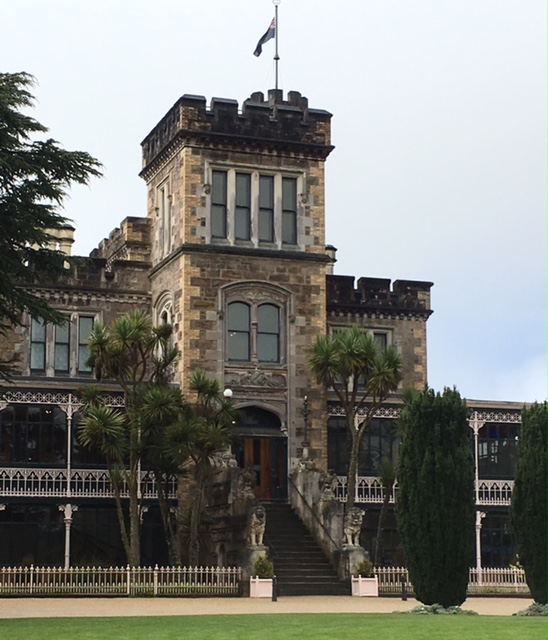
Rain Day #3 – luckily, most of today’s agenda was planned indoors. Olveston Historic Home, followed by a visit to Larnach Castle — New Zealand’s only castle — built high atop the Otago Peninsula, 35 minutes outside Dunedin.
Built in 1906, Olveston is one of NZ’s oldest homes. Knowledgeable guides retold the family’s story & shared interesting tidbits ‘bout turn-of-century New Zealand. Most of the rooms still furnished with the family’s original belongings – like going back in time. Unfortunately, no photos were allowed on the hour-15 minute tour. Walked the property’s small English garden. Peaceful morning start.
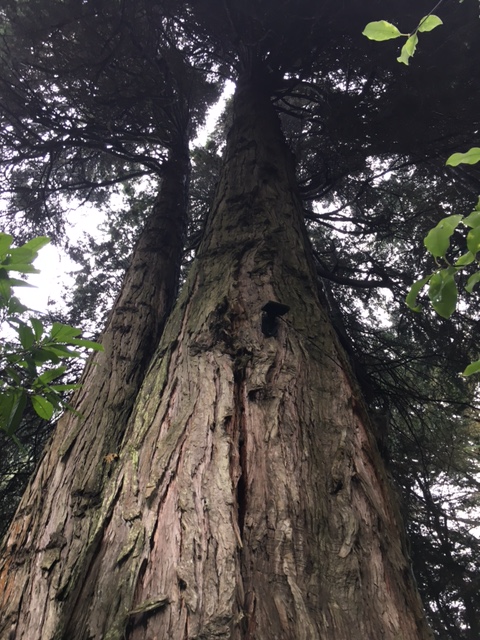
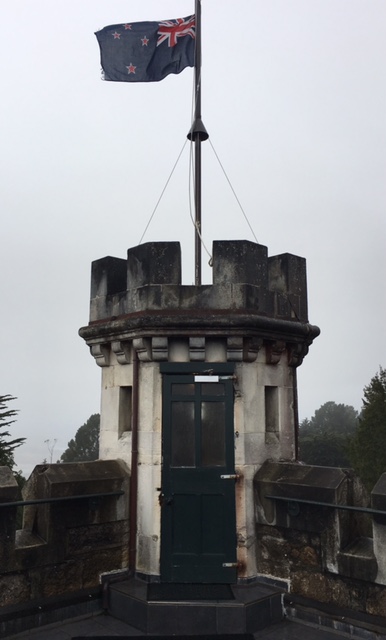
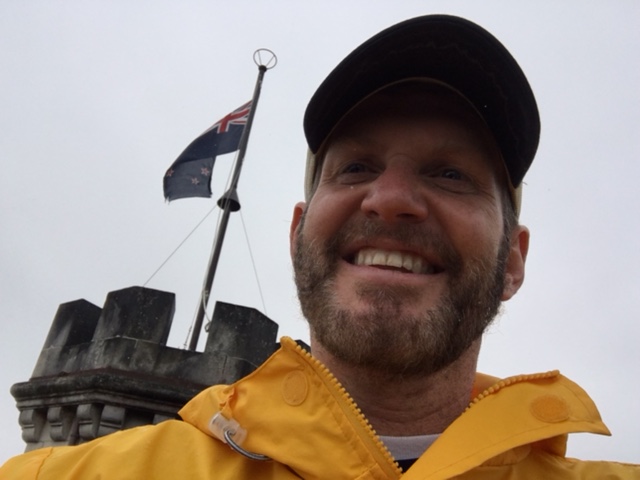
From Olveston, travelled ’round Otago Harbour, past Pukehiki & Portobello. Highcliff to Camp Road, short 10 minute wooded walk to Larnach Castle. 3 flights of ornate rooms, to the top of Castle. Adorned with a flag, view of the Harbour – WOW whatta view.
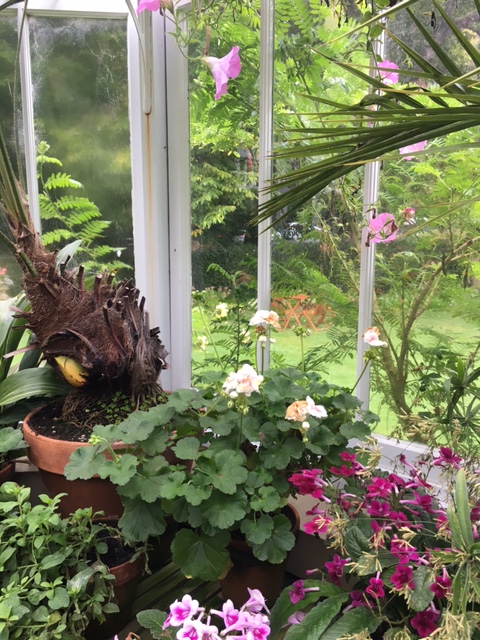
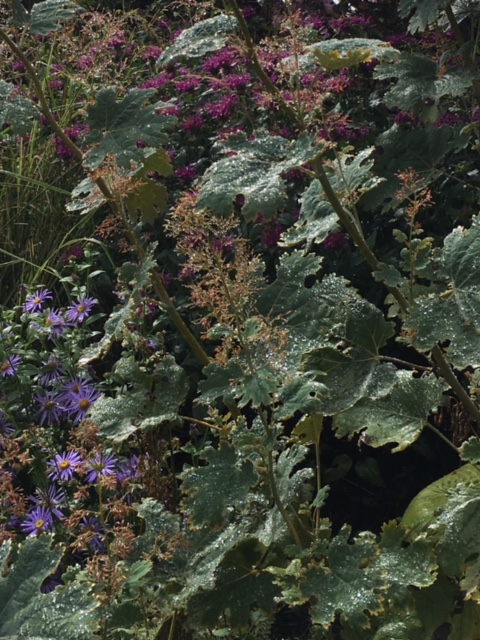
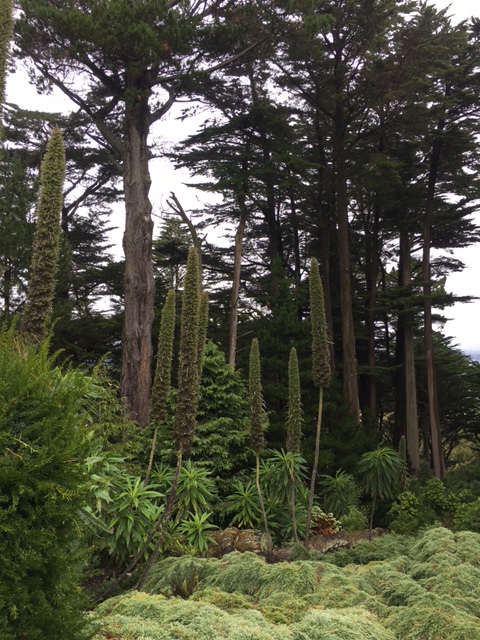
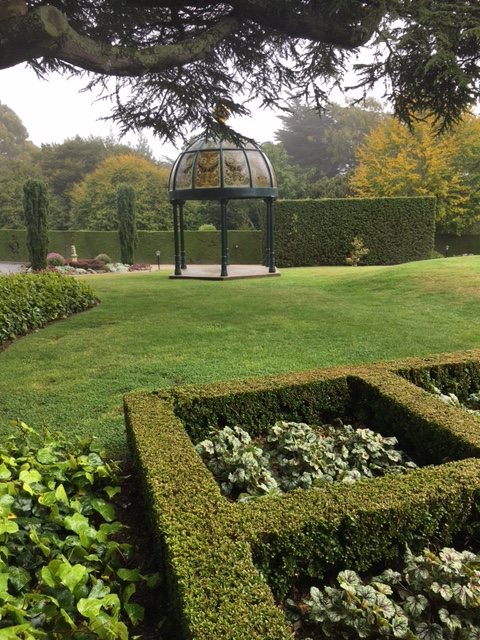
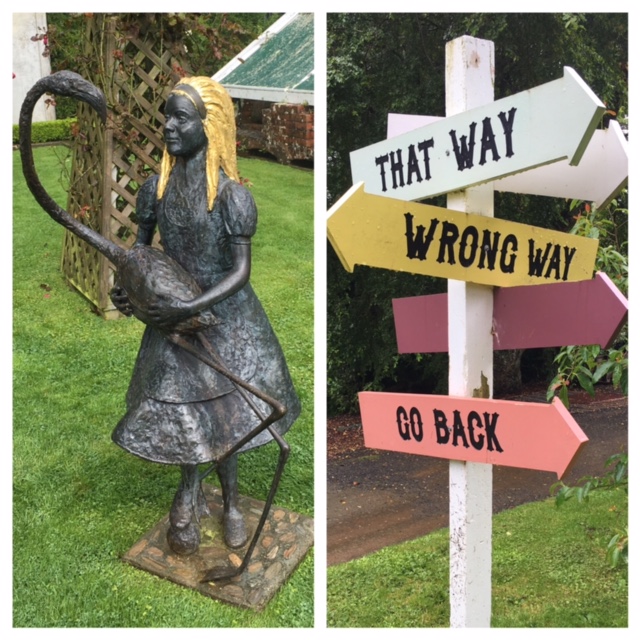
As much as I appreciated the Castle, it’s my slow rainy-day stroll thru the Garden [with friend Dawn] I’ll long remember. Patterned Garden, Lost Rock Garden, the Serpentine Walk, the Rain Forest, South Seas Garden, the Alice Lawn, the Laburnum Arch and Green Room. A unique collection [of gardens] cultivated with New Zealand native plants, plants of the Southern Hemisphere. Much LOVED!
Tomorrow, short hour-half drive to Oamaru – Moeraki Boulders in the a.m., PENGUINS at dusk!
-
- one of NZ’s oldest homes
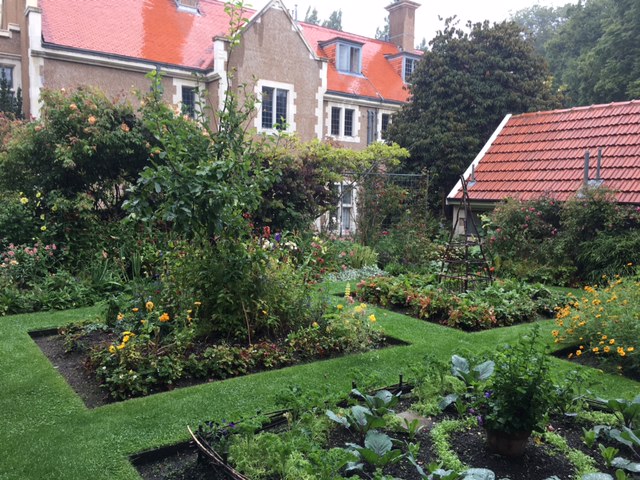
-
- 10-minute wooded walk to the Castle
-
- New Zealand’s only castle
-
- unique collection of gardens, cultivated with New Zealand native plants
-
- Patterned Garden
-
- the Alice Lawn
-
- NZ flag waving BIG & proud
-

- high atop the Otago Peninsula
-
- South Seas Garden

-
- today’s WOW shot — whatta view!
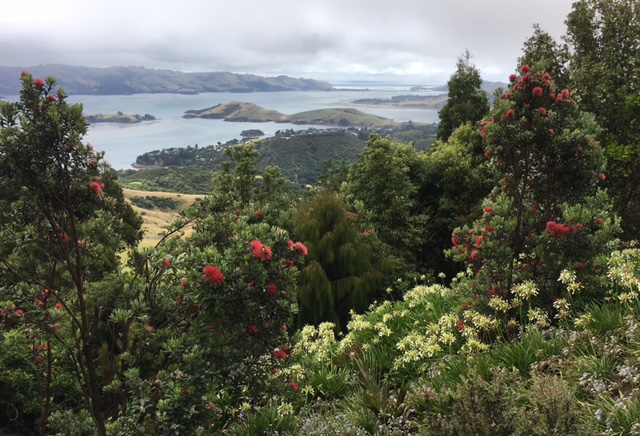
Larnach Castle, NZ
The Story of William Larnach
William James Mudie Larnach, of Scottish descent, was born in 1833 in New South Wales, Australia. His banking career began in Melbourne then followed the gold rush to the Australian goldfields where he was manager of the Bank of New South Wales at Ararat. His bank was a tent and his equipment consisted of dogs, a gun, and strong boxes.
Gold was discovered in Otago, New Zealand, in the 1860’s. Larnach was offered the position of manager of the Bank of Otago in Dunedin, which serviced the extensive goldfields. He sailed for Dunedin in 1867.
Larnach’s brillant career encompassed his merchant empire Guthrie and Larnach, banking, shipping, farming, landholding, politics and… speculation. He travelled extensively and was a cabinet minister in the New Zealand Government, holding various portfolios, over a period of twenty-five years.
Larnach was married three times and had six children. He was pre-deceased by his first two wives and his eldest daughter, Kate.
He took his own life in the New Zealand Parliament Buildings in 1898.
Oompa Loompa doompadee doo
I’ve got another puzzle for you
Oompa Loompa doompadah dee
If you are wise you’ll listen to me
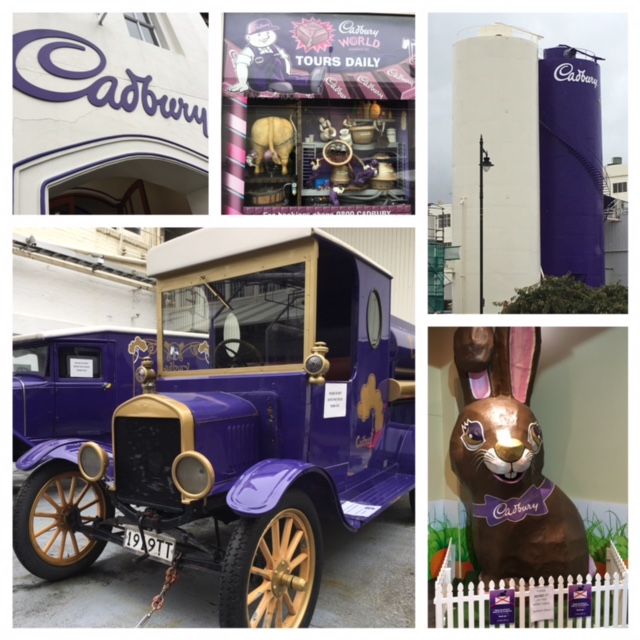
Never got to meet Willy Wonka – but I did get my ‘Augustus Gloop’ on at Cadbury’s Chocolate Factory.
Early morning start. 9 mile trek on Frankton Track, mix of trail & bike path, east alongside Lake Wakatipu. Shower, apartment check-out, last day in Queenstown – goodbyes to my fave New Zealand town. 3 ½ hour drive, south & far far east today. After a half-week shouldering NZ’s Tasman Sea, would spend the next three days bumped up against the vast Pacific.
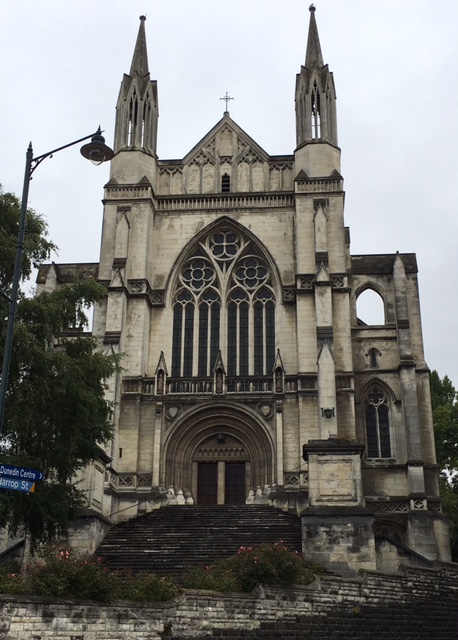
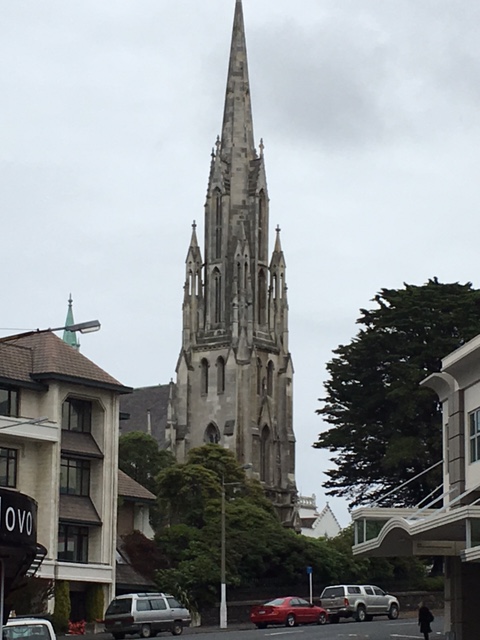
Arrived in South Island’s 2nd largest city, Dunedin, early afternoon. First hotel stay since Auckland. Grabbed a map & a rain jacket – CHOCOLATE! Walked past high steeple churches & historic city buildings in Dunedin Central ‘the Octagon’, then continued south toward the water, past Anzac Square to Cadbury World on Cumberland Street.
2 large lumbering storage tanks invade the landscape – one white, one purple, ‘Cadbury’ emblazoned in script. Tour ticket purchased, quick pass thru the factory museum, iconic Cadbury bunny photo shot. Sadly no other pics to share. Cell phones, purses, backpacks all confiscated before eyeing the company’s chocolate making process. No joking with Chocolatiers – take their business mighty seriously.
[Gotta/hafta/must sneak out an everlasting gobstopper (remember creepy Slugworth?) — another Wonka reference 🙂 ]
Inside, pulled a lever, filled my cup with liquid chocolate. How much is too much? Anything more than half a cup…live & learn. Heart racing, sugar-shook remainder of the tour. Oh to be a kid again. Went home with a satchel of marshmallow candy bars.
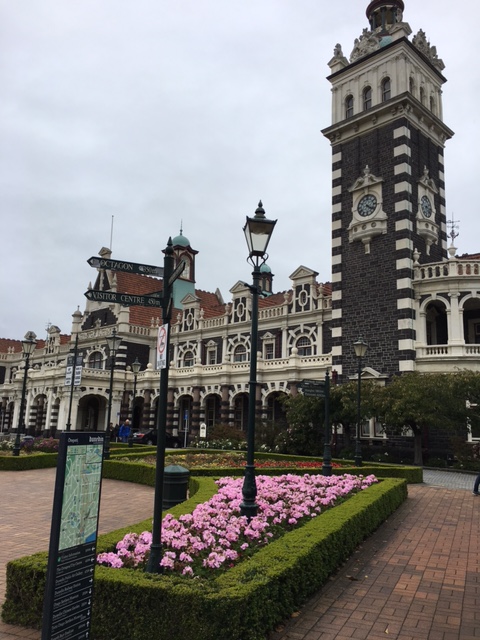
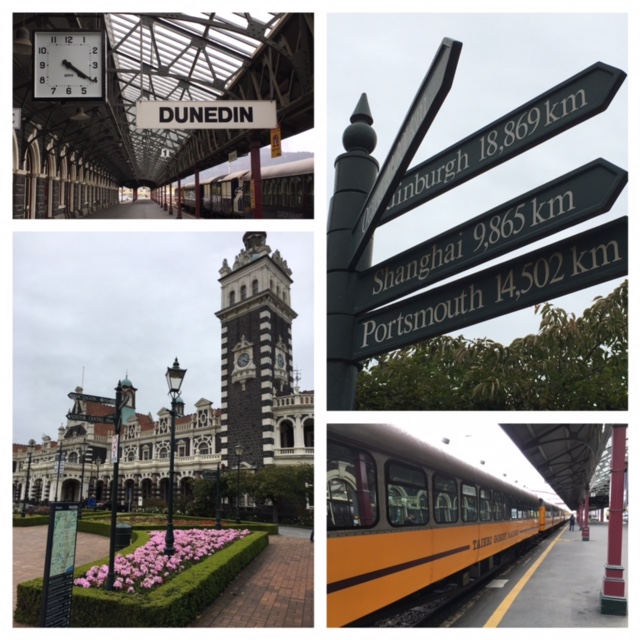
Return walked thru Dunedin’s historic Railway Station in Anzac Square. Train love.
Inclement weather, one more day. Boardwalk strolled on St Clair Beach, site of the South Island Surf Championships. Stormy day, HUGE waves. Rain or shine – vacation continues. Tomorrow’s quest? To the top of Larnachs Castle!
-

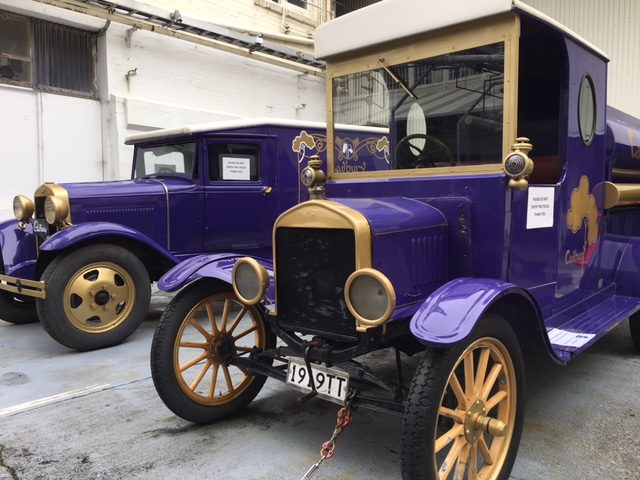
- Ford Model A: one of Cadbury’s original delivery vehicles
-
- Chocolate Lovers dream day
-
- St Paul’s Cathedral
-
- Knox Church, George Street
-
- Anzac Square
-
- Dunedin Railway Station
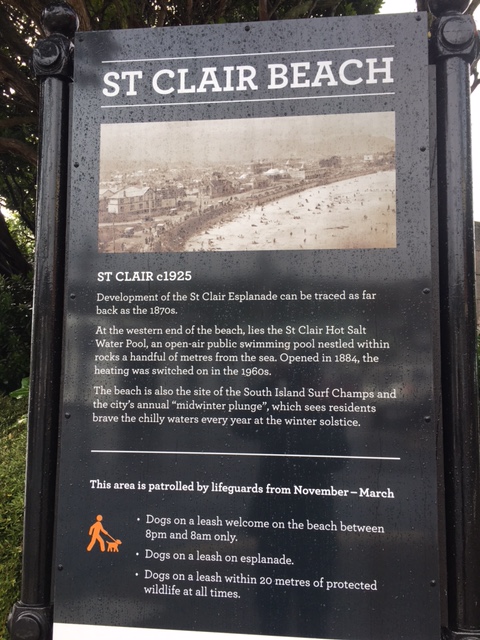
-
- stormy day, HUGE waves
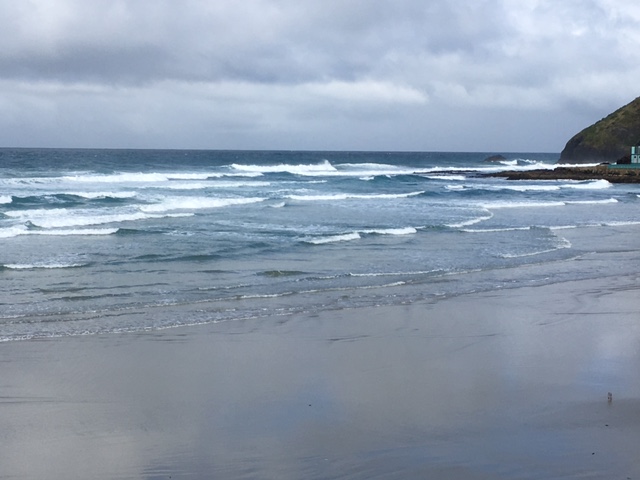
St Clair Beach
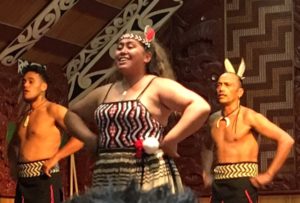
The haka is a traditional war cry, dance, or challenge from the Māori people of New Zealand. It is a posture dance performed by a group, with vigorous movements and stamping of the feet with rhythmically shouted accompaniment.
 Ended day 2, bit rushed thru Te Puia & neighboring Whakarewarewa Thermal Valley.
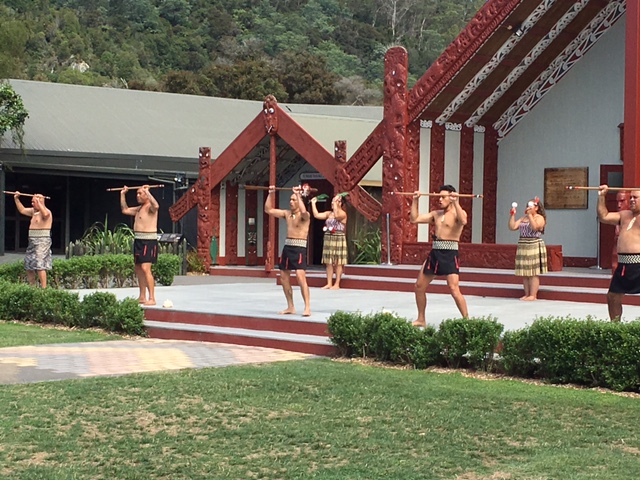
Māori welcome, followed by a traditional Haka [cultural performance] in Te Puia’s marae [meeting house]. While native Hawaiians & Māori share Polynesian roots, their dance traditions are super diverse. The Haka is not your Momma’s Hula – comprised of warrior chants & postures…was never invited from the audience to join in. LOL>
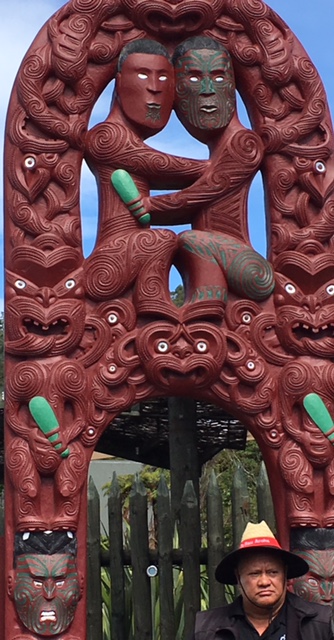
The first Māori settled New Zealand 800 years ago, leaving their native Hawaiki on 7 long boats, Waka. The seven major tribes of New Zealand are identified by their Waka name.
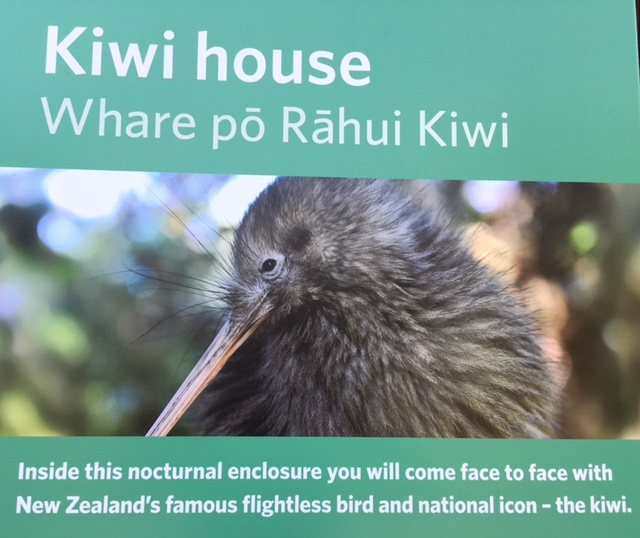
Toured Te Puia’s woodcarving & weaving schools, then quietly stalked New Zealand’s iconic (& endangered) Kiwi bird. Nocturnal by nature, a tiny female inside Te Puia’s Kiwi House would be my only Kiwi claim this trip. Unfortunately, no pics allowed.
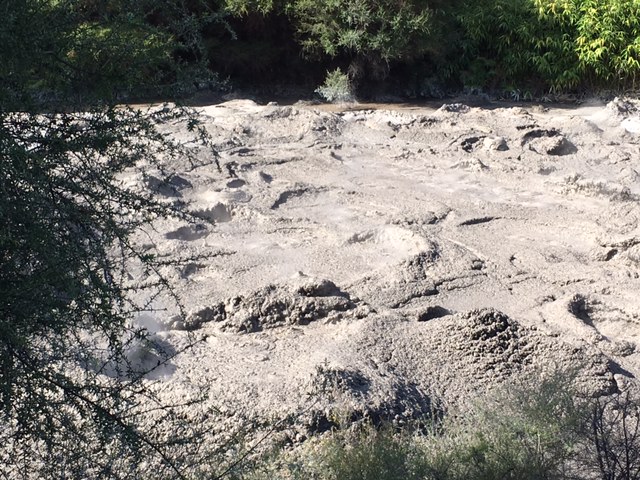
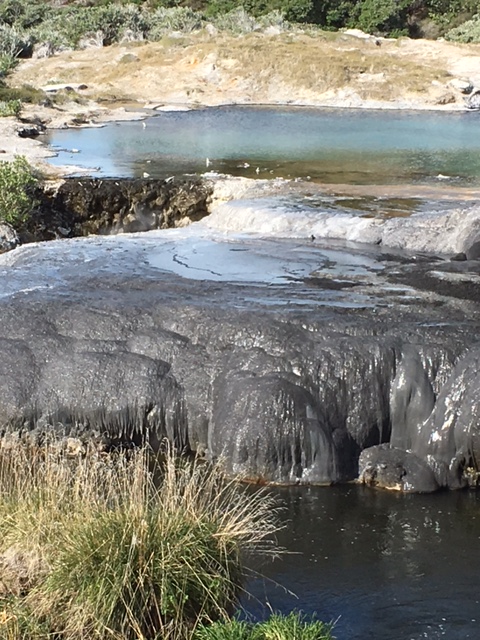
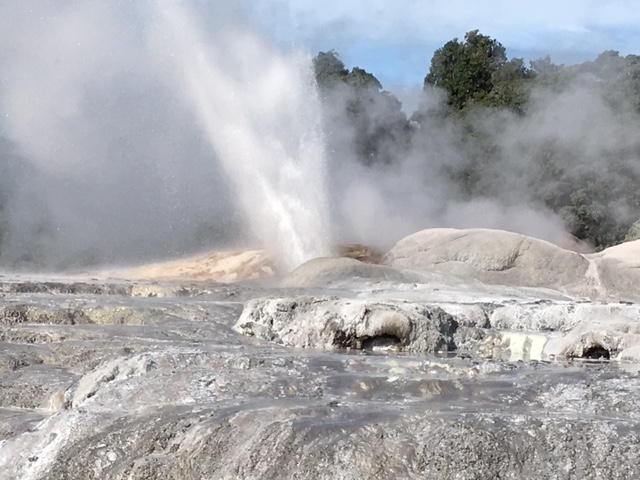
Remainder of the tour would be spent geyser-gazing…my third continent of geysers. Iceland, USA’s Yellowstone & today, New Zealand’s Pōhutu geyser – biggest geyser in the southern hemisphere. Mud pools, vapour jets soaring 30 meters high – AND of course, that distinct sulfur scent. FAAANNNTASTIC!
Māori culture & geysers – coupled with tomorrow’s bike tour, a top 5 MUST DO New Zealand experience.
-
- traditional Māori welcome
-
- not your Momma’s hula
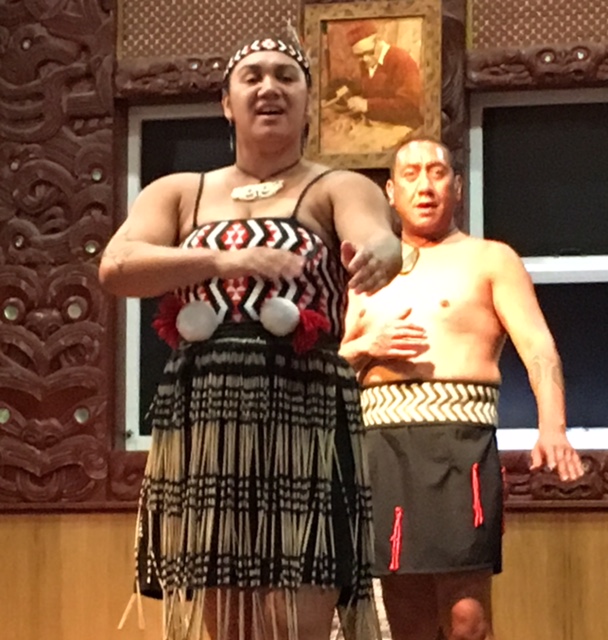
-
- traditional woodcarving school
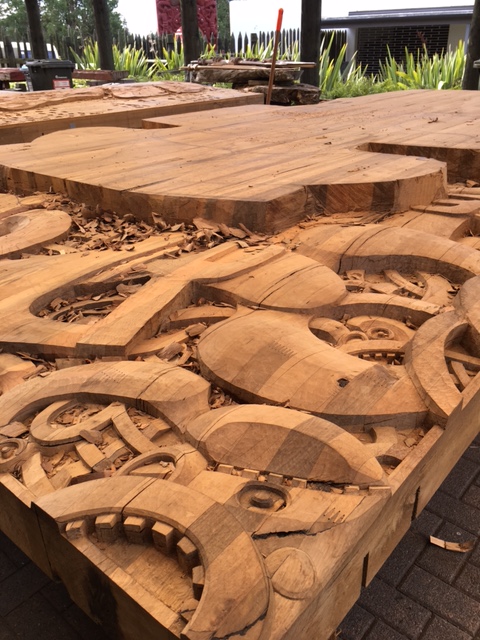
-
- tiny female inside Te Puia’s Kiwi House would be my only Kiwi claim this trip
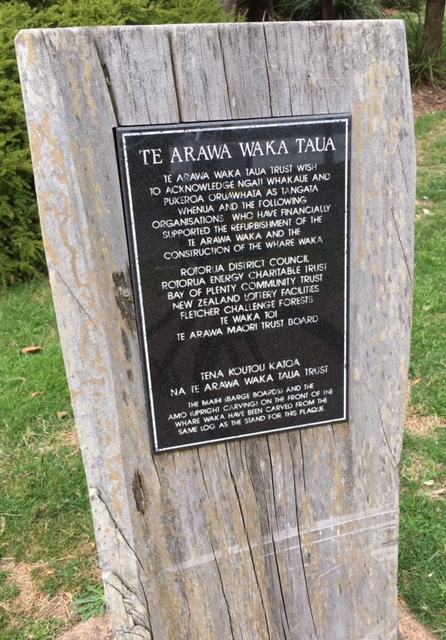
-
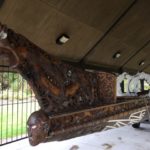
- first Māori settled 800 years ago, leaving their native Hawaiki on 7 long boats, Waka
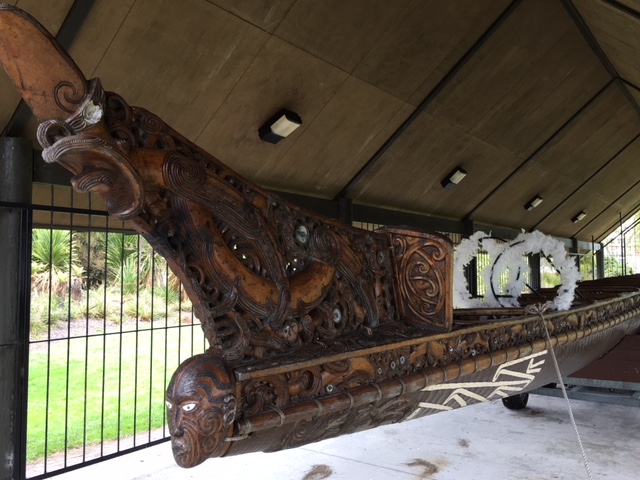
-
- gurgling mud pools
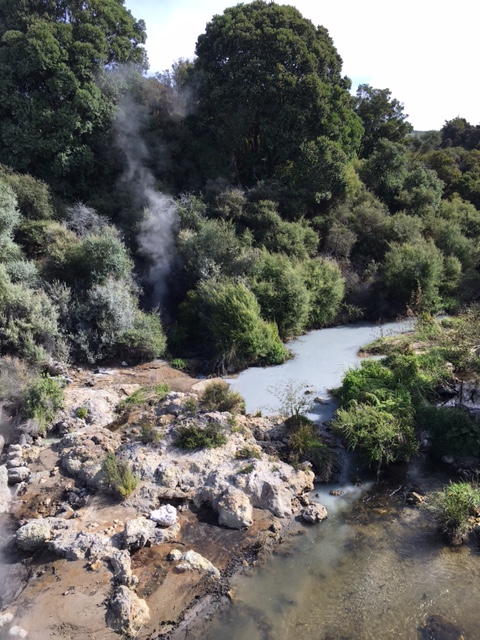
-
- Pōhutu geyser
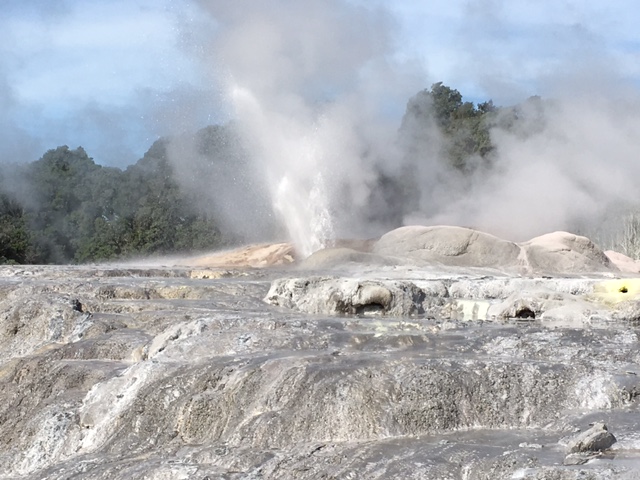
-
- biggest in the southern hemisphere
Māori Haka
Pōhutu geyser