The whitestone townscape of Oamaru contains some of the best-preserved heritage buildings in New Zealand. In the late 19th century, the town prospered through goldmining, quarrying and timber milling. Some of the wealth was spent on elegant stone buildings made from local limestone.
Development slowed, but the population continued to grow until the 1970s. With the closure of the port and the New Zealand economy stalled, Oamaru found itself hard hit. In response it started to re-invent itself, becoming one of the first New Zealand towns to realise its built heritage was an asset.
Oamaru Harbour is home to a colony of little blue penguins – that’s why this small New Zealand town made the itinerary.
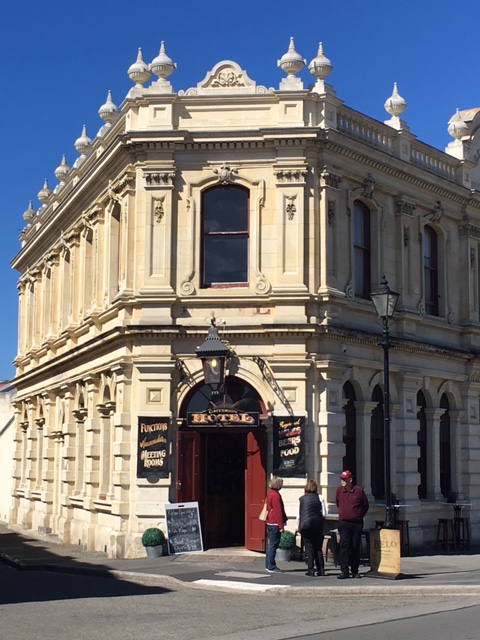
Checked into our hotel, The Criterion Hotel, on the edge of Oamaru’s historic Victorian Precinct. Rooms were closet small, bathroom-shared with the entire floor PLUS slept above a local bar – the experience of sleeping in a historic Victorian hotel.
The Criterion Hotel was built in 1877 to a design by Oamaru architects Forrester and Lemon. It was built for its first proprietor William Gillespie and operated as a licensed hotel until prohibition came to Oamaru in 1905.
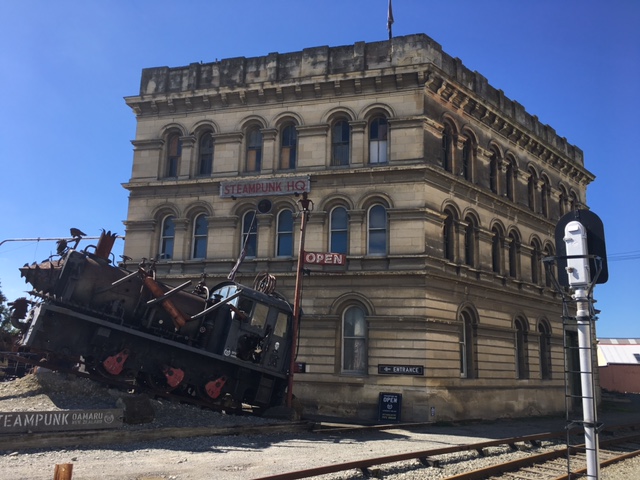
No penguins ‘til dusk. What to do? Our heavily tatted hotel clerk recommended Steampunk Headquarters. Asked the lady twice, wasn’t sure what she was saying. Steam – what? Only 2 buildings down, in an old Grain Elevator Building – ok, why not?
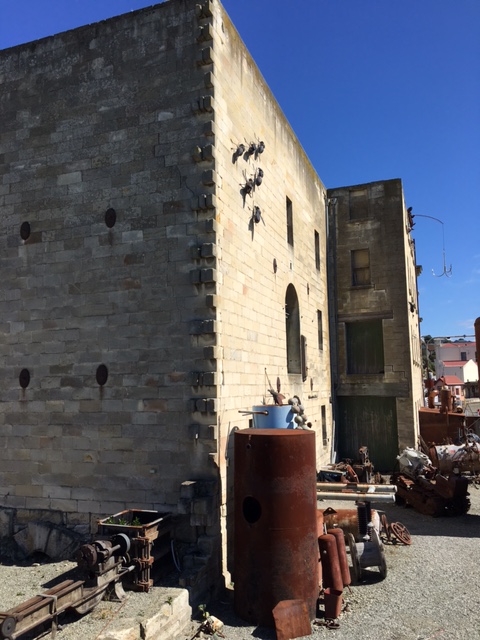
Outside of the imposing free-standing stone building, a coin-operated “steampunk” engine greets visitors, complete with lights, engine and train while noises, and fire breathing out of its chimney. The building’s exterior walls are decorated with creations such as giant flies made from metal and industrial parts.
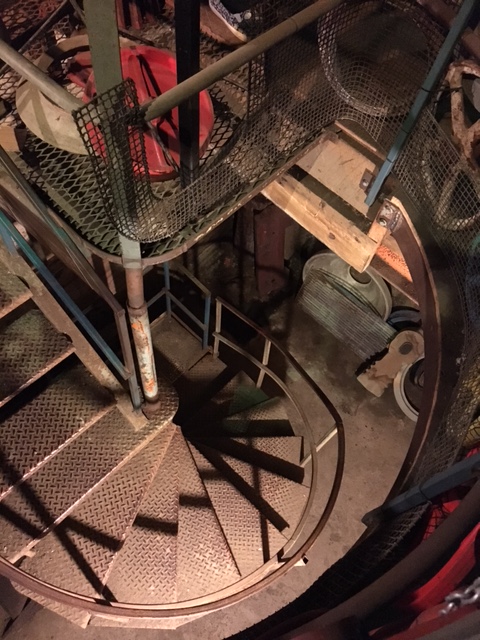
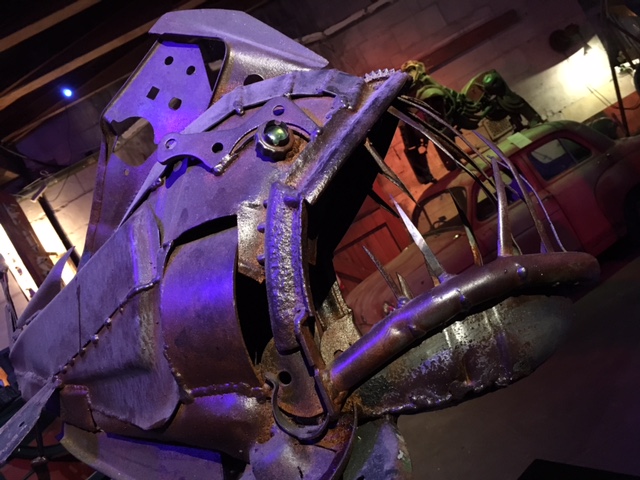
Inside, the gallery presents a theme of a dark post-apocalyptic vision of a future “as it might have been”. Contraptions and bizarre machinery featuring heavy use of copper, gears, pipes, gas cylinders, as well as an ensemble of skeletal sculptures are lit by flickering lights and accompanied by projectors and background sounds.
If you’re looking for normal, this ain’t it. First room: dark, uninviting. Large creepy pipe organ. Weird, beyond my comfort zone.
Second room: started connecting/seeing the art. Background music pulled me in, helped open my eyes/added to the experience. And then…the Portal. Green light flashed ‘available’. Entered, shut the door behind me, waited. Like all of Steampunk, wasn’t sure what to expect. Overhead lights dimmed, music started slowly – and the light show began. WOW, whatta experience.
Back outside, walked thru abandoned, vacated rail cars. Giant houseflies garnished the building’s outer walls. A 20ft fisherman dropped bait from Steampunk’s roof. I am better having visited, a New Zealand ‘must see’.
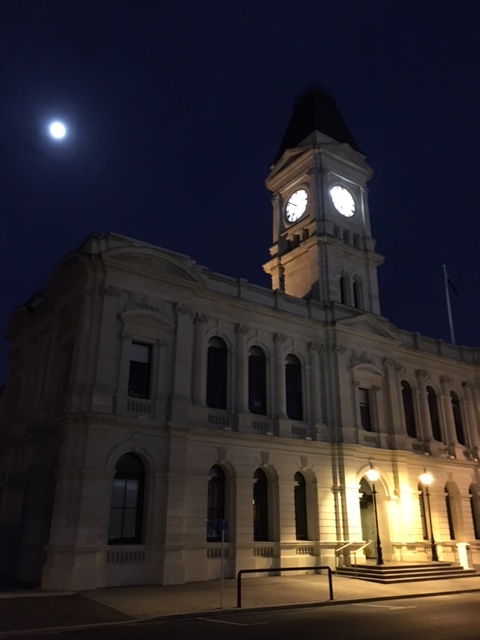
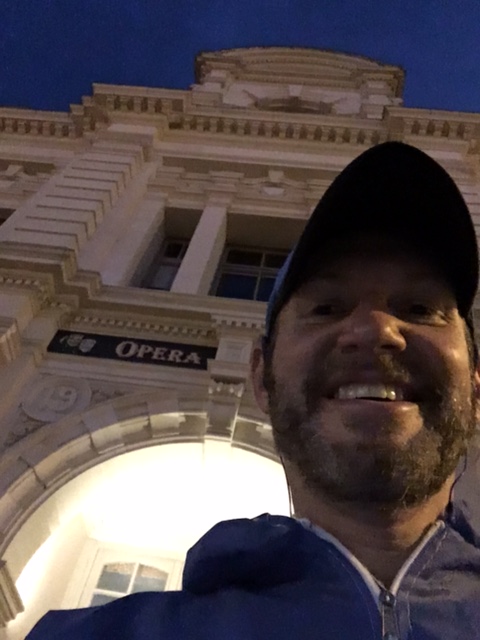
Actually sightsaw most of Oamaru’s downtown & historic district pre-dawn on Thursday morning’s 4 mile run. Christchurch airport, puddle-jumper flight to Hamilton – vacation ends on North Island. Tomorrow’s adventure? Hobbiton.
-
- Criterion Hotel
-
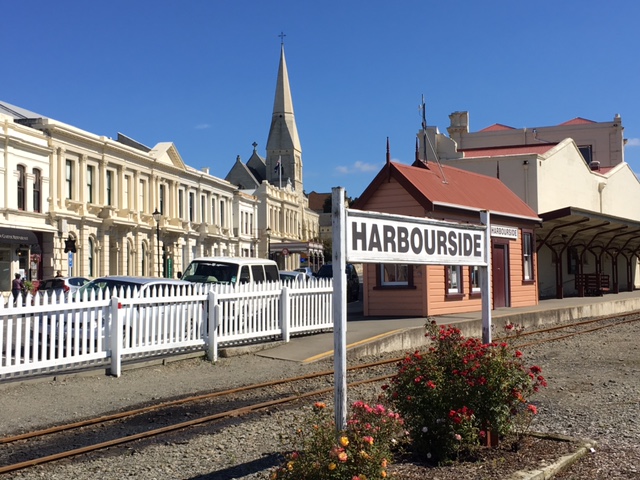
- Harbourside Station
-
- coin-operated “steampunk” engine
-
- The Portal
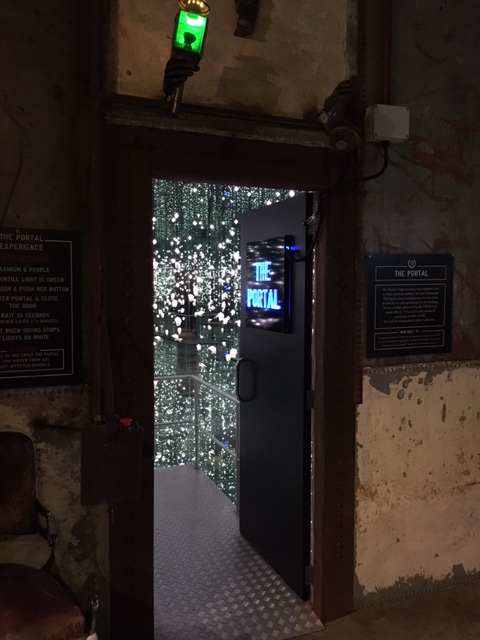
-
- 2 minutes of WOW!
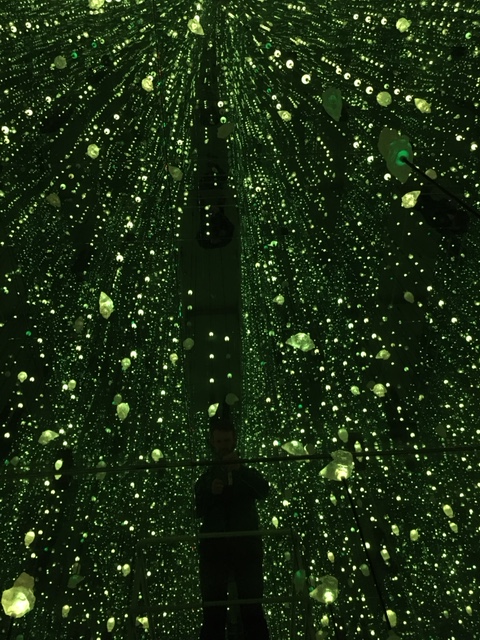
-
- exterior walls: flies & a fisherman
-

- Oamaru Public Gardens

-
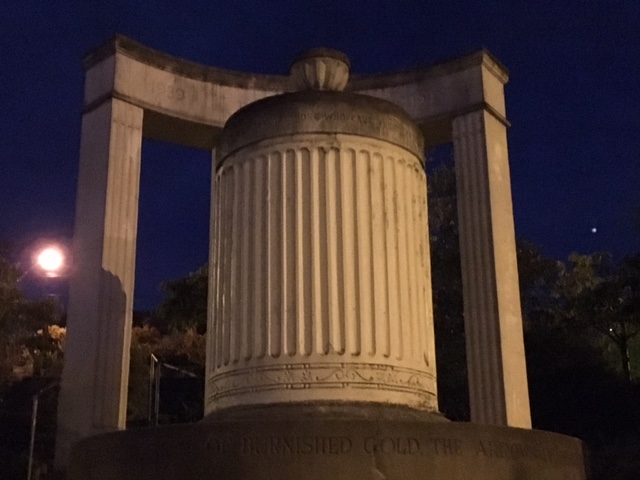
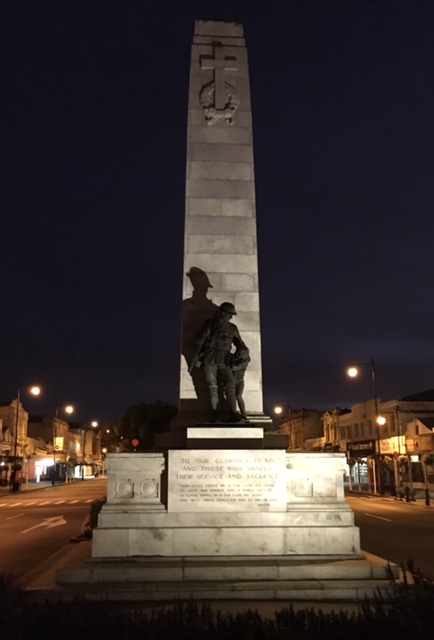
- ANZAC Day “Lest we Forget”
-
- World War I Memorial
-
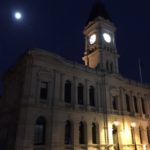
- Oamaru limestone (former Post Office, circa 1883)
-
- ‘every day’s a run day’
Steampunk HQ: The Portal
After three days of rain, woke Wednesday to SUNSHINE.
Skipped my morning run, opting for an afternoon harbor trek in nearby Oamaru. Easy coastal drive on New Zealand’s Highway 1. Cool morning temps. Rural, flat. No traffic, landscape void of the Island’s Southern Alps.
right, Moeraki Boulders. left, Trotters Gorge. 1030am – how ‘bout both?
One hour rainforest jaunt toward the Gorge. After multiple days in ‘civilization’, GREAT to be outside again & hiking. Sounds of cicada, giant ferns wet with moisture – LOVE LOVED this morning. Cave explored, then rental car’d another 2 miles north to the Boulders. $5 in an ‘honest’ jar, then descended on Koekohe Beach using stairs created by the gift shop.
The Moeraki Boulders are unusually large and spherical boulders lying along a stretch of Koekohe Beach on the wave-cut Otago coast of New Zealand between Moeraki and Hampden. They occur scattered either as isolated or clusters of boulders within a stretch of beach where they have been protected in a scientific reserve.
Local Māori legends explained the boulders as the remains of eel baskets, calabashes, and kumara washed ashore from the wreck of Arai-te-uru, a large sailing canoe.
Wonder of nature. Like giant fossilized sea turtle eggs, pushed up/eroded from the sand. Precisely spherical, randomly dropped/isolated on NZ’s Pacific shore. Walked an hour up & down the beach – enjoying the ocean breeze, soaking up Vitamin D.
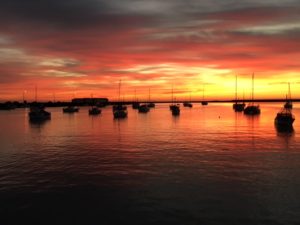
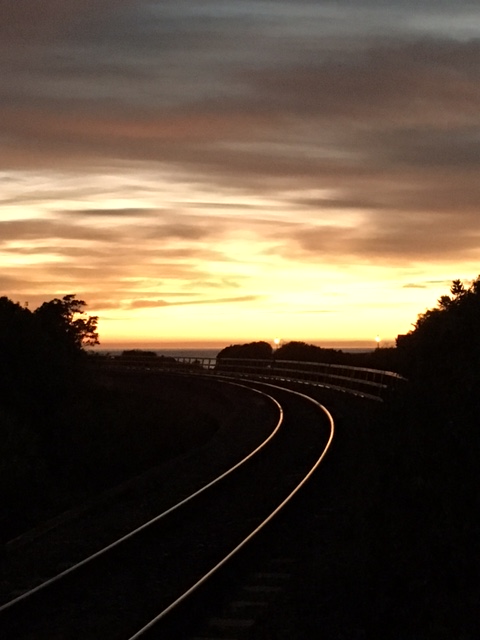
whatta sunrise – WOW!
Lunch & an ice cream bar, then road-warrior’d 45 minutes further to Oamaru.
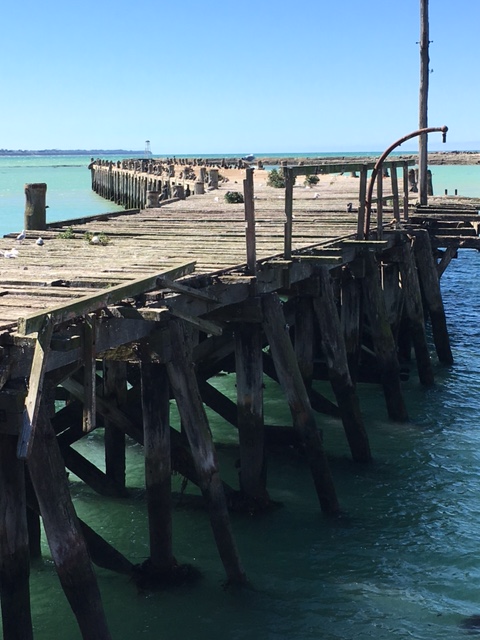
Hotel check-in, harbour-walked past old rotting bridges covered with sea birds – to tonite’s adventure destination: Oamaru’s Blue Penguin Colony. Purchased our VIP tickets (worth every dime) – laced up/got my afternoon run on.
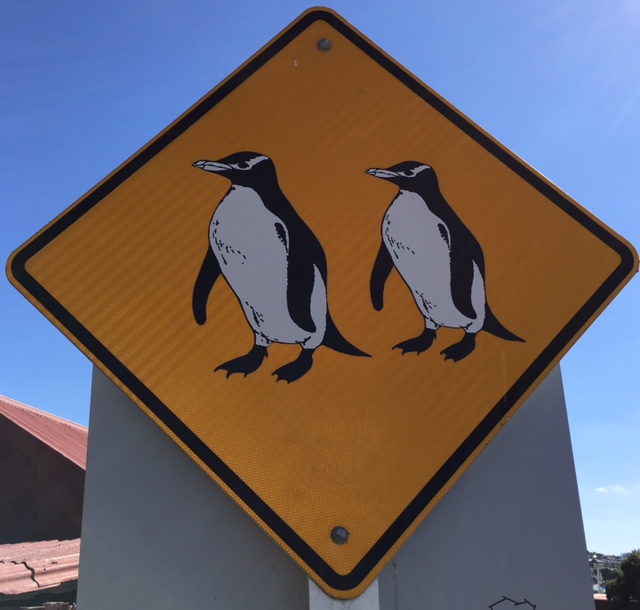
Penguin Crossing sign (don’t see THAT every day), then switchback’d UP, UP, UP. Climbed Cape Wanbrow Reserve, trail-ran high above Oamaru – WOW views of the mighty Pacific below. Last long run before Saturday’s Kirikiriroa Marathon.
Dusk. Nature guides kept eyes on the ocean while ‘paying customers’ quietly huddled in a small outdoor amphitheatre (unfortunately, no pics allowed). Pods of 6, 10, 15 small penguins banded together, beached, then waddled uphill past our premium seats. Man-made boxes constructed on shore would act as the birds’ evening home – returning back to the ocean early pre-dawn. WOW WOW WOW!
South Island, super sad to say goodbye. Glaciers, waterfalls, rainforest. Jetboated the Waimakariri, cruised Doubtful Sound, climbed to the top of Larnach Castle & witnessed magic – the world’s smallest penguins returning home after day-fishing the Pacific.
Next up: Hamilton, on New Zealand’s tropical North.
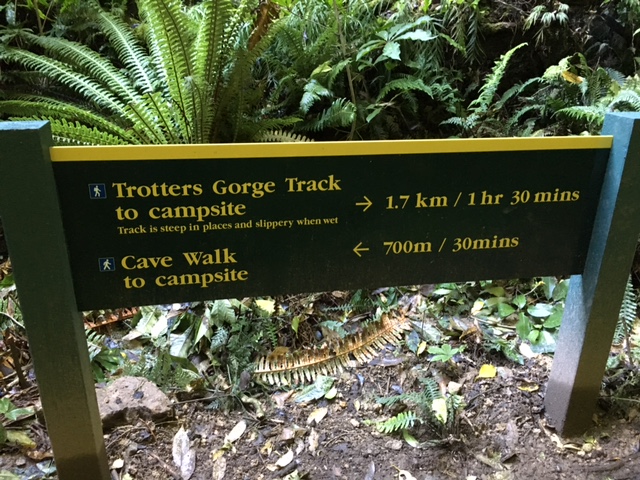
-

- hiking & caving
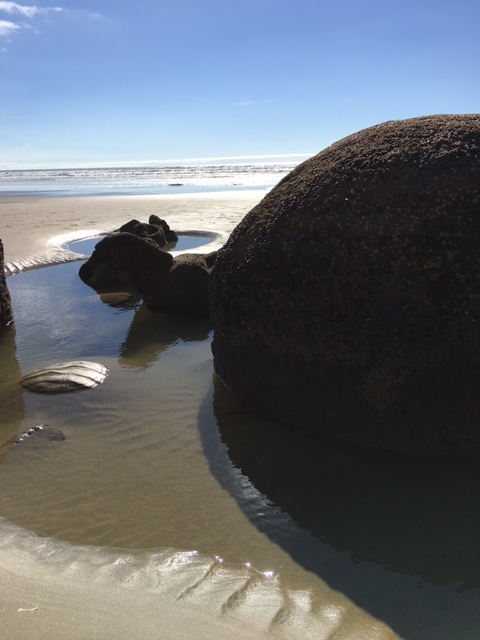
-
- wonder of nature
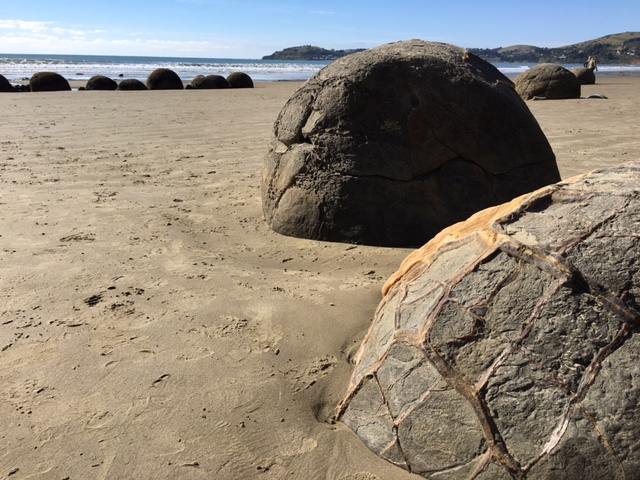
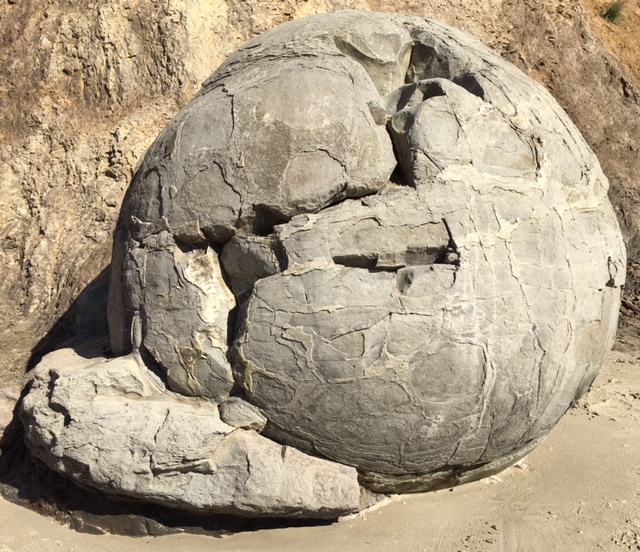
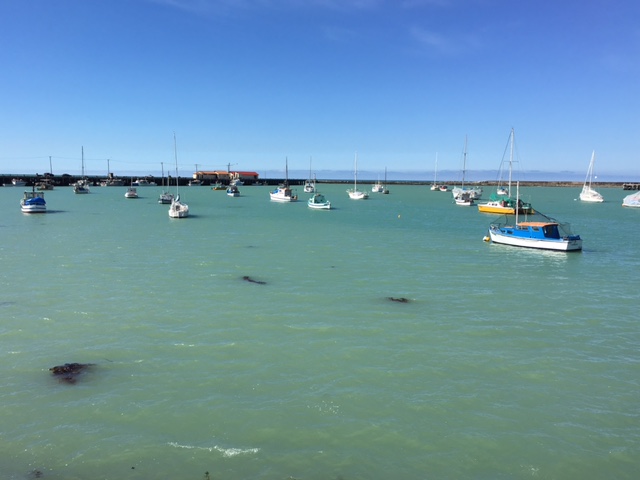
-
- don’t see THIS every day 🙂
-
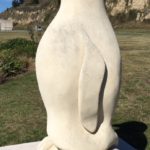
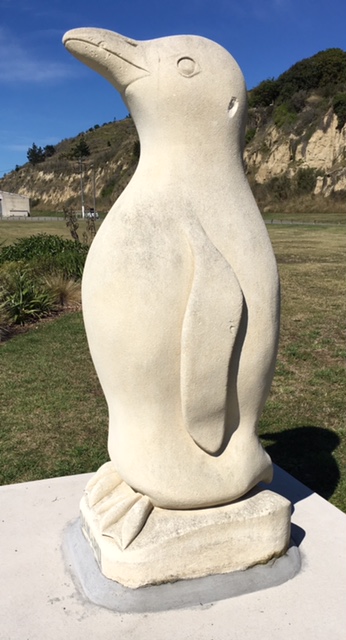
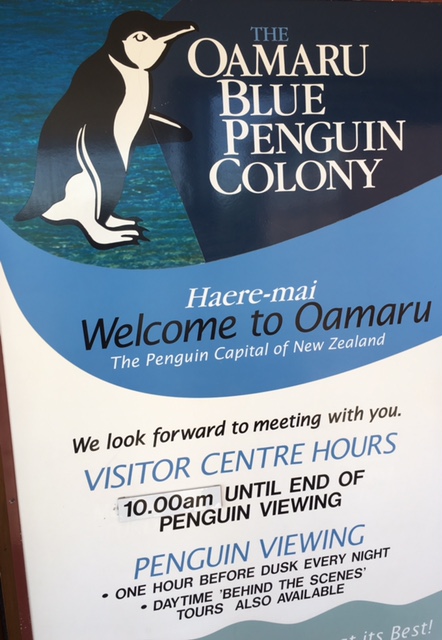
- Penguin Capital of New Zealand
-
- pods of 6, 10, 15 small penguins banded together, beached, then waddled uphill past our premium seats
-
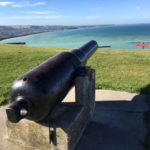
- Cape Wanbrow Reserve
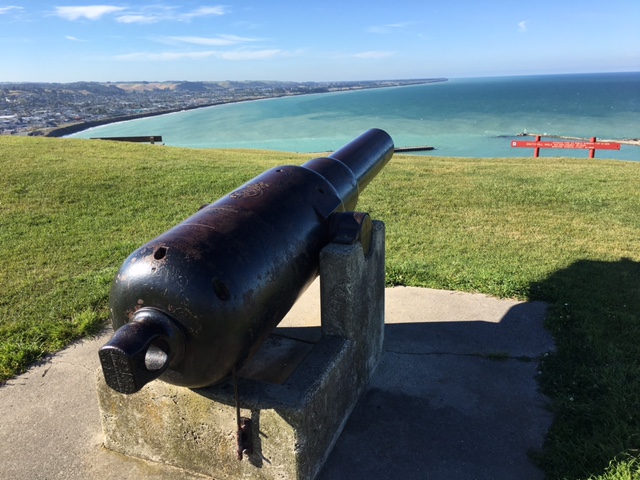
-
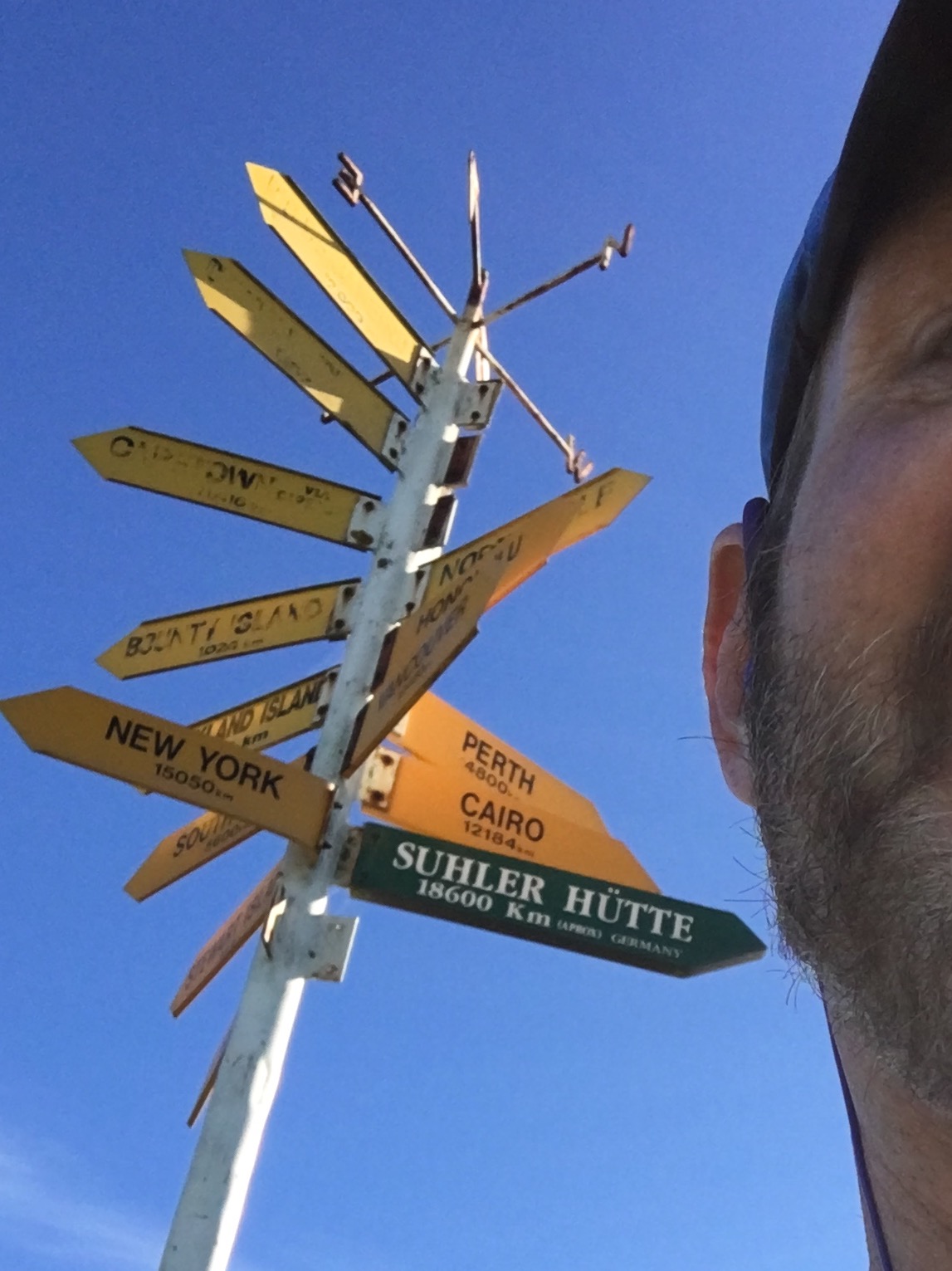
- Suhler Hütte?
Koekohe Beach, NZ
A neurotic is a man who builds a castle in the air. A psychotic is the man who lives in it.
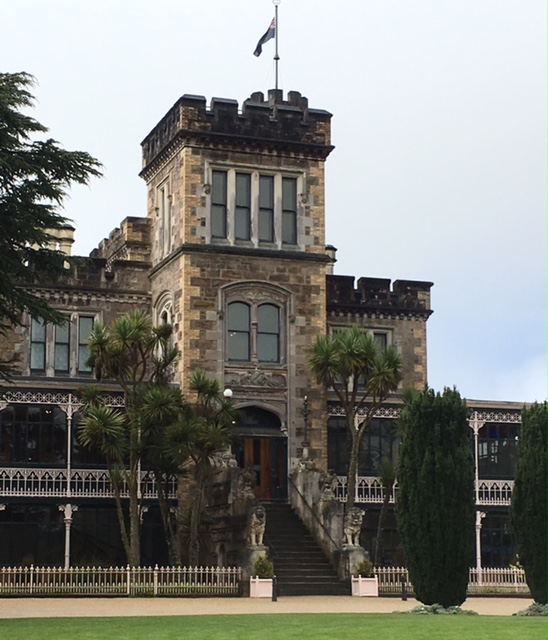
Rain Day #3 – luckily, most of today’s agenda was planned indoors. Olveston Historic Home, followed by a visit to Larnach Castle — New Zealand’s only castle — built high atop the Otago Peninsula, 35 minutes outside Dunedin.
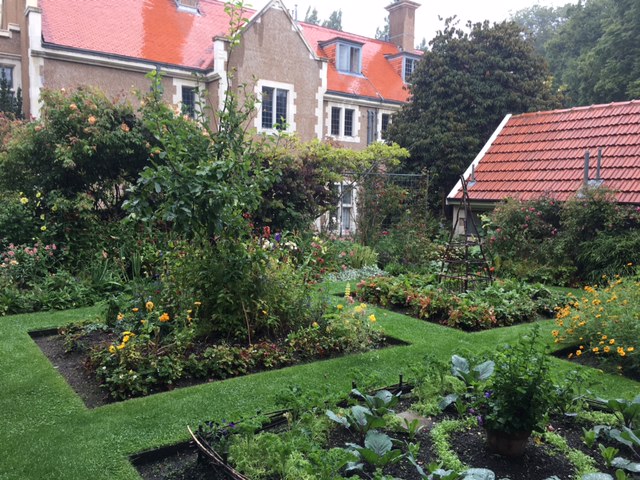
Built in 1906, Olveston is one of NZ’s oldest homes. Knowledgeable guides retold the family’s story & shared interesting tidbits ‘bout turn-of-century New Zealand. Most of the rooms still furnished with the family’s original belongings – like going back in time. Unfortunately, no photos were allowed on the hour-15 minute tour. Walked the property’s small English garden. Peaceful morning start.
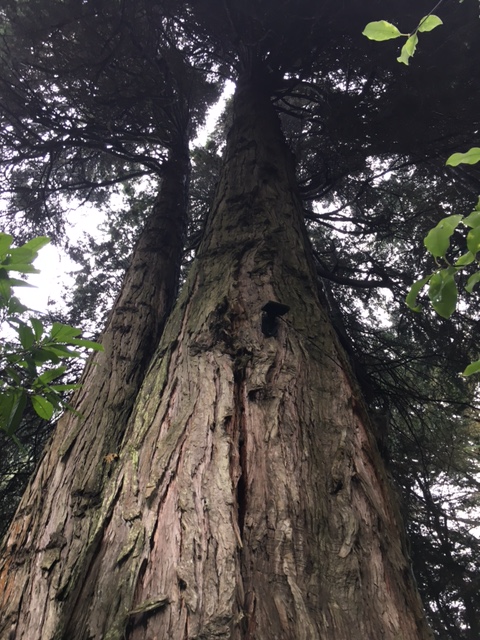
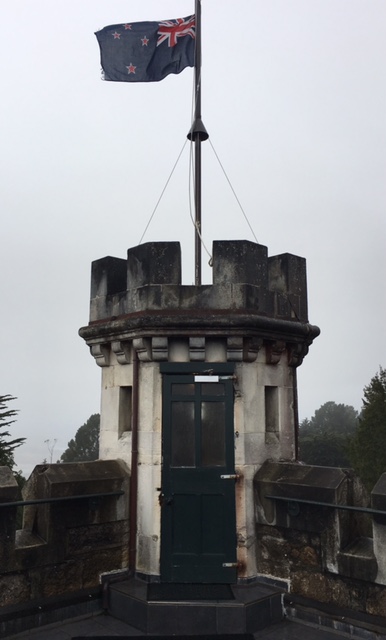
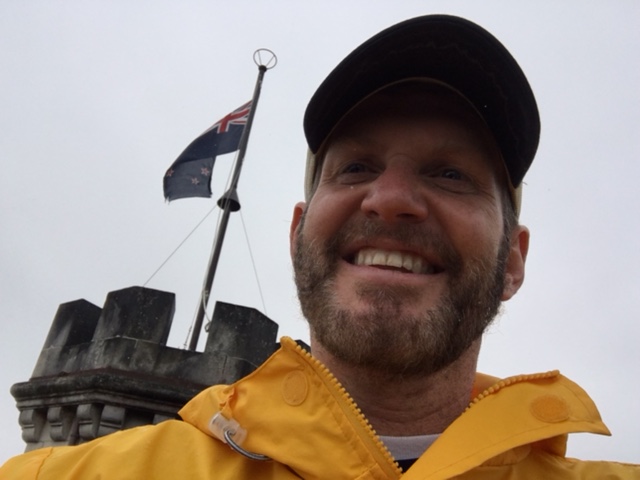
From Olveston, travelled ’round Otago Harbour, past Pukehiki & Portobello. Highcliff to Camp Road, short 10 minute wooded walk to Larnach Castle. 3 flights of ornate rooms, to the top of Castle. Adorned with a flag, view of the Harbour – WOW whatta view.
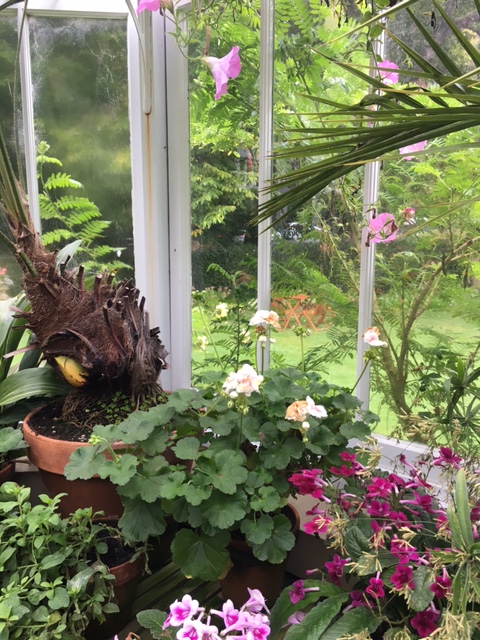
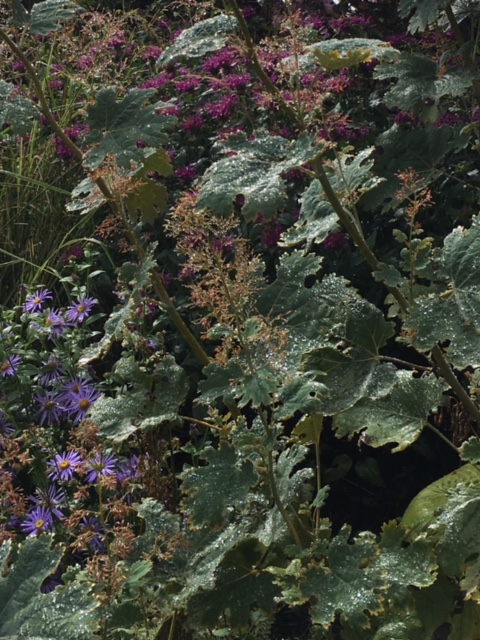
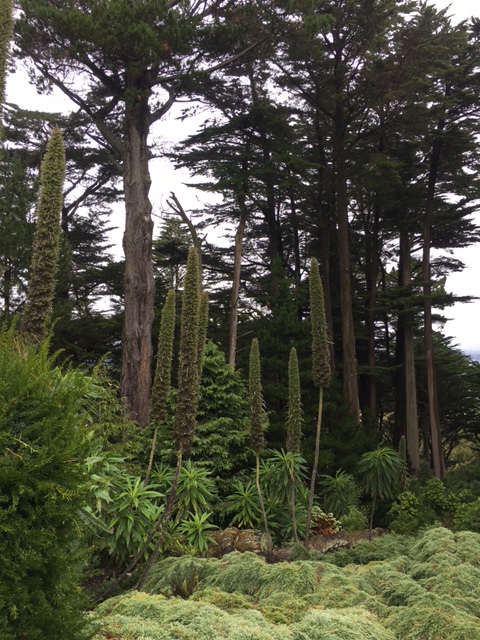
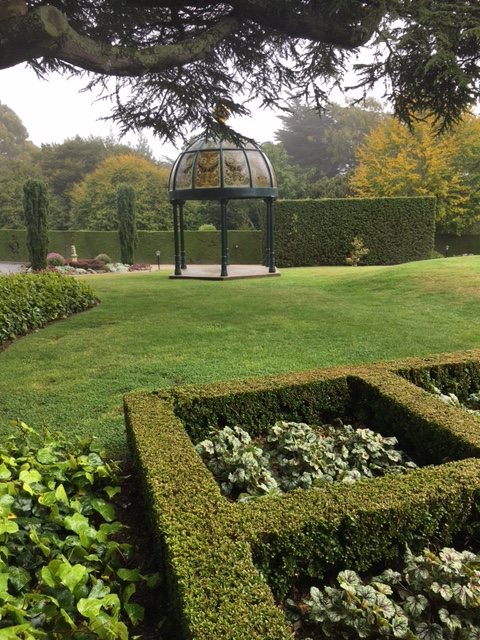
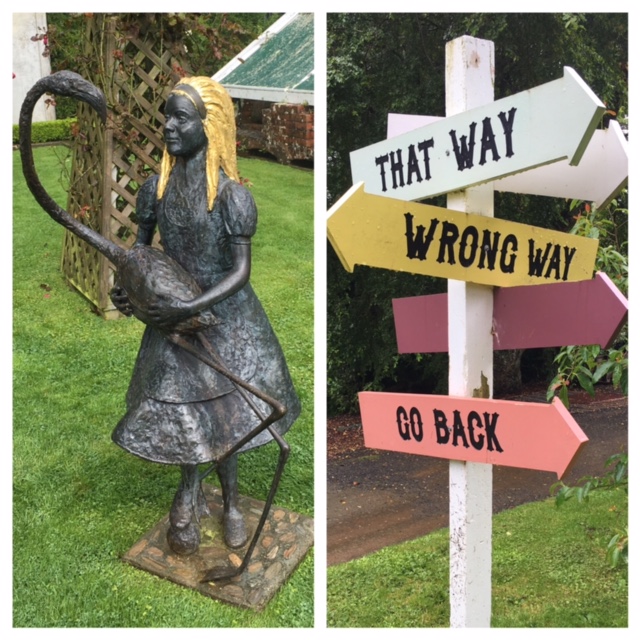
As much as I appreciated the Castle, it’s my slow rainy-day stroll thru the Garden [with friend Dawn] I’ll long remember. Patterned Garden, Lost Rock Garden, the Serpentine Walk, the Rain Forest, South Seas Garden, the Alice Lawn, the Laburnum Arch and Green Room. A unique collection [of gardens] cultivated with New Zealand native plants, plants of the Southern Hemisphere. Much LOVED!
Tomorrow, short hour-half drive to Oamaru – Moeraki Boulders in the a.m., PENGUINS at dusk!
-
- one of NZ’s oldest homes
-
- 10-minute wooded walk to the Castle
-
- New Zealand’s only castle
-
- unique collection of gardens, cultivated with New Zealand native plants
-
- Patterned Garden
-
- the Alice Lawn
-
- NZ flag waving BIG & proud
-

- high atop the Otago Peninsula
-
- South Seas Garden

-
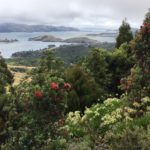
- today’s WOW shot — whatta view!
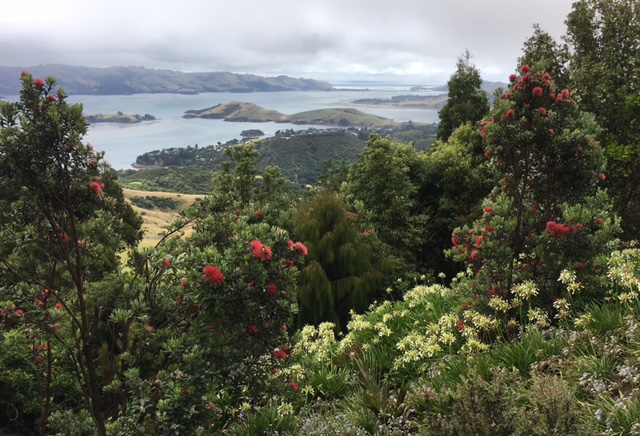
Larnach Castle, NZ
The Story of William Larnach
William James Mudie Larnach, of Scottish descent, was born in 1833 in New South Wales, Australia. His banking career began in Melbourne then followed the gold rush to the Australian goldfields where he was manager of the Bank of New South Wales at Ararat. His bank was a tent and his equipment consisted of dogs, a gun, and strong boxes.
Gold was discovered in Otago, New Zealand, in the 1860’s. Larnach was offered the position of manager of the Bank of Otago in Dunedin, which serviced the extensive goldfields. He sailed for Dunedin in 1867.
Larnach’s brillant career encompassed his merchant empire Guthrie and Larnach, banking, shipping, farming, landholding, politics and… speculation. He travelled extensively and was a cabinet minister in the New Zealand Government, holding various portfolios, over a period of twenty-five years.
Larnach was married three times and had six children. He was pre-deceased by his first two wives and his eldest daughter, Kate.
He took his own life in the New Zealand Parliament Buildings in 1898.