97 degrees. Been a hot week at 5500ft. Solution? Go higher 🙂
5 days after my disappointing Bighorn retreat, HIKE weekend. Chicken soup for the brain.
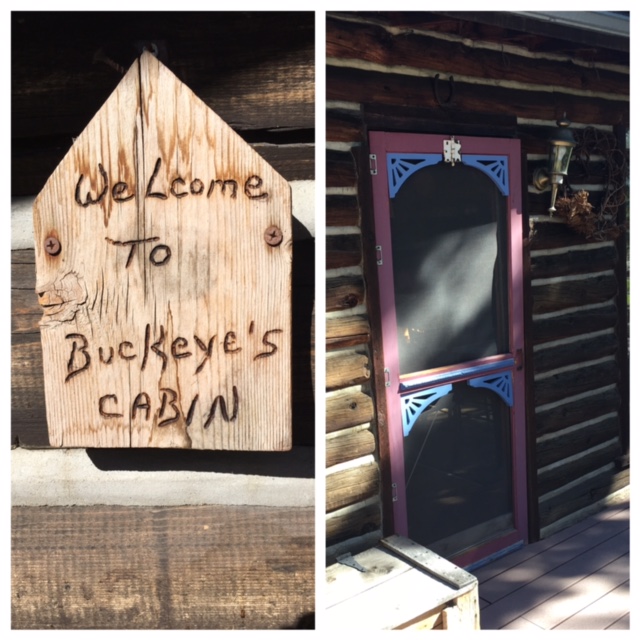
Friday drive after work, 3 hours to Leadville on the Continental Divide. (first time ever) Rented a Ro-friendly cabin just north of town. Pup & I would hit it hard early a.m. – but not too early. Taking advantage of the area’s cool mountain air, good sleeping weather.
Backpack, boots, multiple shirts (I hike in layers), whole lotta water. 8am start, trailhead parking already FULL. Found a spot quarter-mile away on the road to Massive. Today’s hike destination: Mt. Elbert, first 14er of 2017. FAAANNNTASTIC!
Summitted this peak in 2012. Not a technical hike, but remember it being one of the longest. Tallest peak in Colorado, 2nd highest in the lower 48. This early in the season (mid-June), just happy to ferret out a hikeable peak. Heavy snow season.
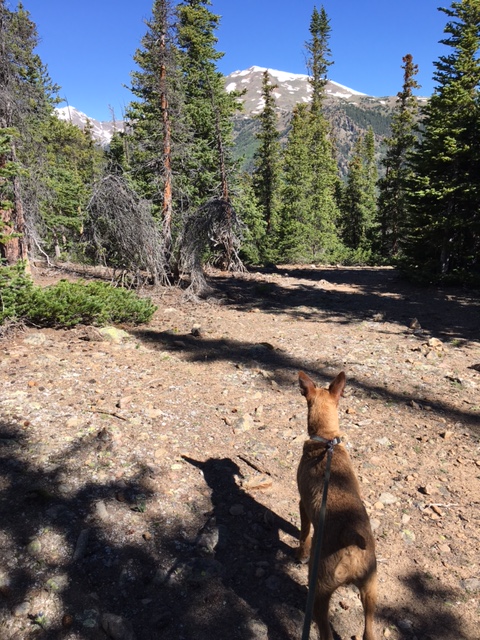
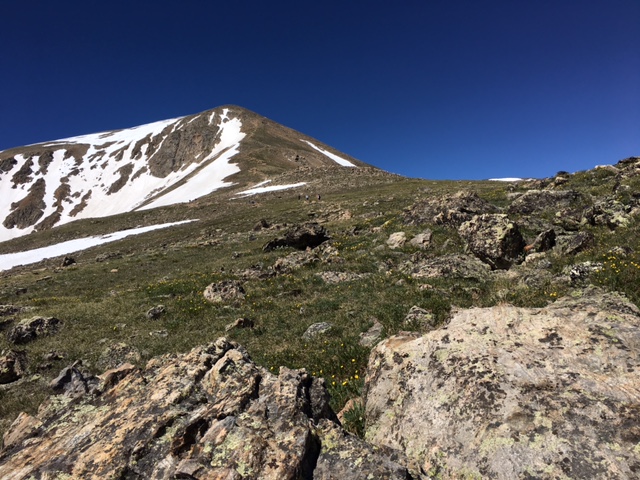
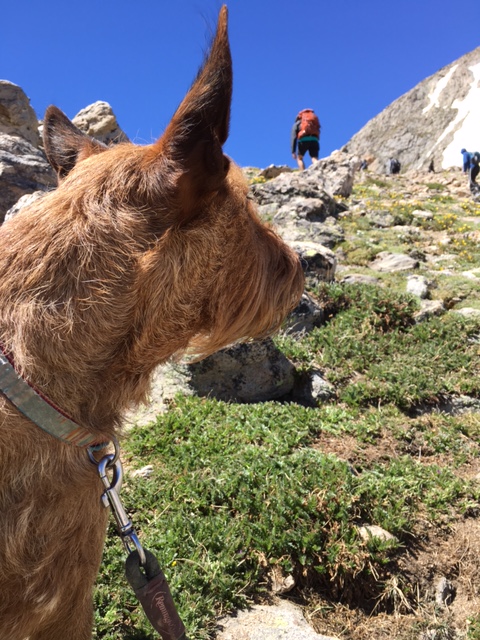
3 false summits, whole lotta up-n-down. Challenging but doable, did my online research. Almost 4 miles of treed wildlife: ground squirrels, chipmunks & (surprisingly) a flock of prairie hen. Kept Ro tethered to my belt – he’s a big FAN of chicken ❤
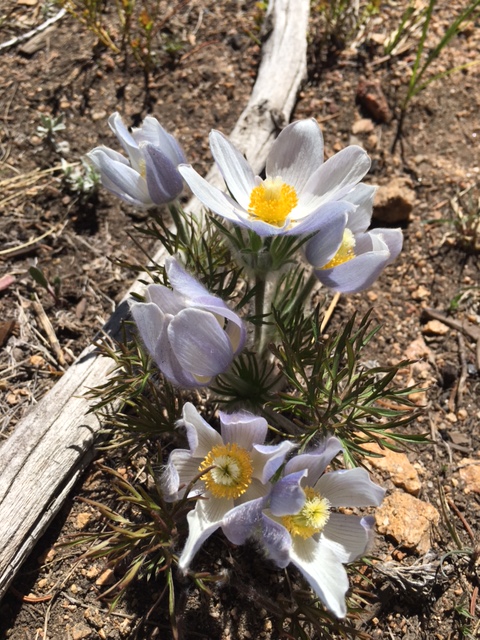
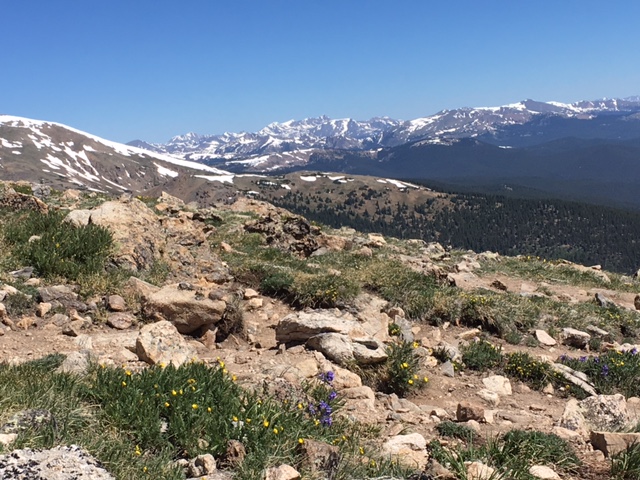
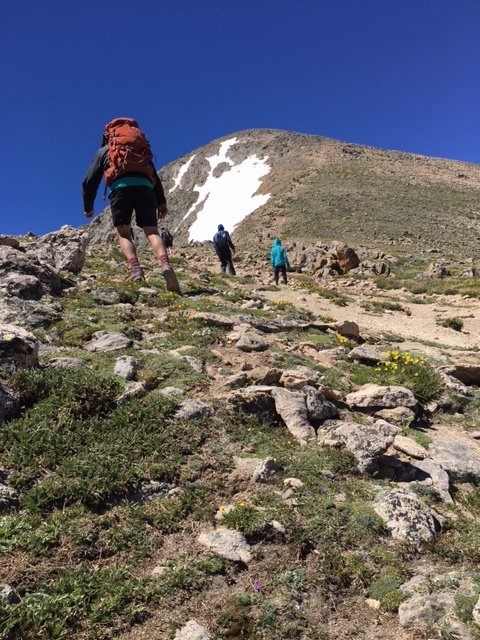
UP UP UP, water break. Different set of muscles used [vs marathoning]. UP UP UP, ‘nother water break. the Scenery? No comparison. Thin air, wildflowers, intermittent tuffs of green – life finding a way above 12,000ft.
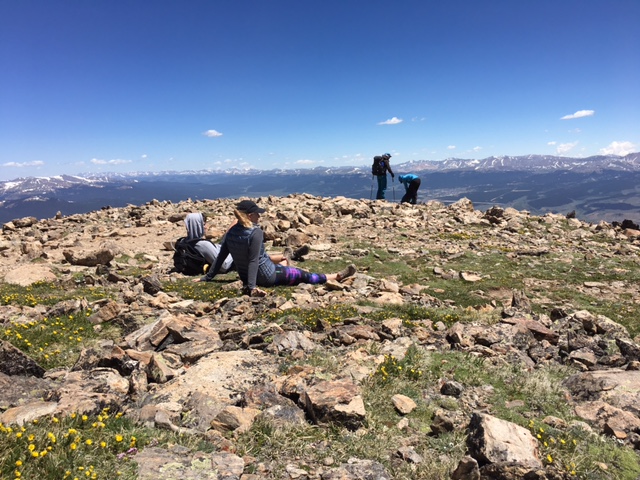
False summit snacked. Took in the panorama, circled by mountains & snow pocked tundra.
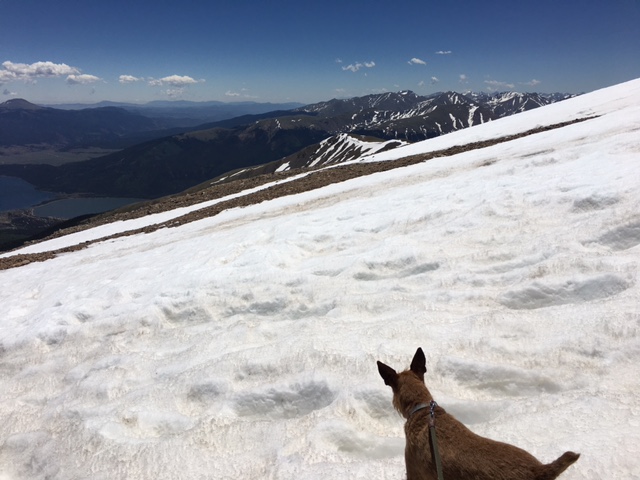
1100ft of vertical to go. UP UP UP, ‘cross a large snow field. Teeny tiny people visible high above, our first summit view. Let Ro romp in last winter’s remnants but kept Pup leashed. Season change/high altitude sun, unexpected crevasses/cornice breaks.
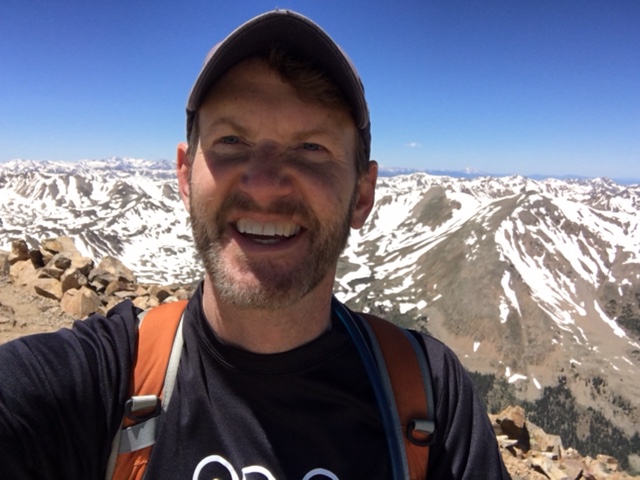
400ft more, SUMMIT SUCCESS!
Pulled a jacket out of the backpack & hunkered behind a large boulder. Chicken jerky for Pup, Turkey avocado for Dad. Long hike back – best part? No return drive ‘til morning. Weekend cabin rental, highly recommended – even Ro got a bath 🙂
-
- Hot week. Solution? Go higher 🙂
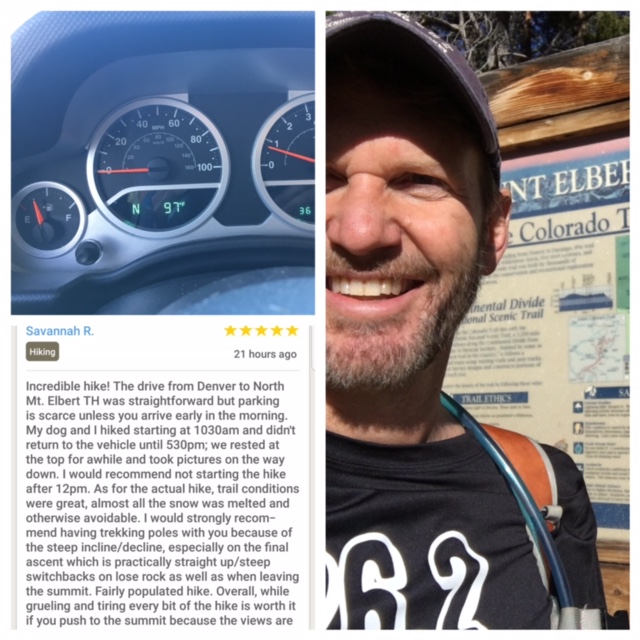
-
- CHICKEN!
-
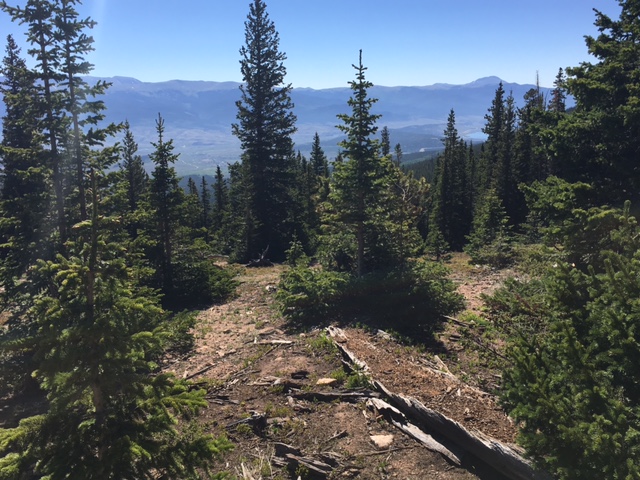
- spruce & Ponderosa pine
-
- life above 12,000ft
-
- that’s not ‘the’ summit
-
- UP UP UP
-
- false-summit snacking
-
- June SNOW
-
- 1st 14er summit of 2017: chicken soup for the soul — LOVE LOVE LOVE!
-
- weekend cabin on the Divide, highly recommended
Mt Elbert 2017
“After each failure, ask forgiveness, pick yourself up, and try again.” ― C.S. Lewis
Failure/not completing what one’s started – it’s a tough pill to swallow. Some spout excuses, I’ve never been one to jump on board. Running’s a solo sport. Body failure, mental weakness, weather conditions – doesn’t matter. It’s you, the trail & a pair of shoes.
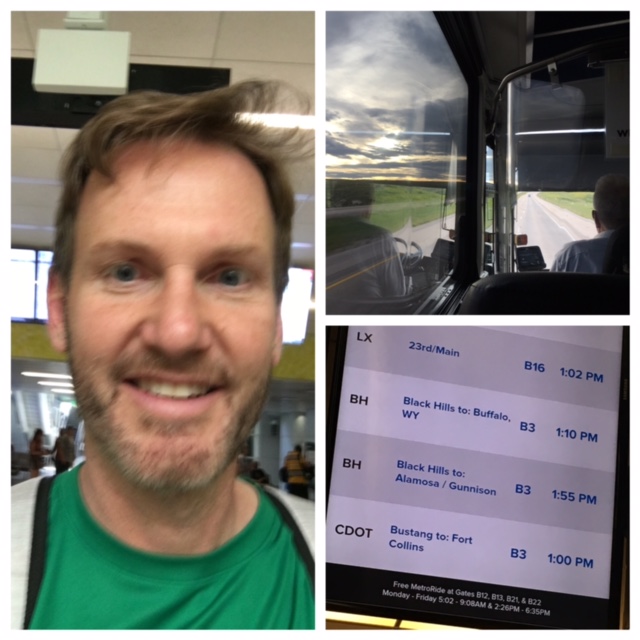
Started the weekend early like most (of my) race adventures. Booked a bus ticket, not a lotta options to northwest Wyoming 🙂 Boulder to Denver, Denver to Buffalo (Wyoming, not New York). 9 hours. Then ride-shared with a buddy to Dayton (Wyoming, not Ohio).
Bib pick-up Friday afternoon in Sheridan. 2 drop bags packed for Saturday’s 52 mile run.
2-mile taper runs all week. Half-month watching Bighorn videos [on YouTube]. Hot temps, their principle complaint. Tomorrow’s forecast? Light rain & mud, remnants from last week’s snow. PERFECT conditions. Summer’s come late to Wyoming.
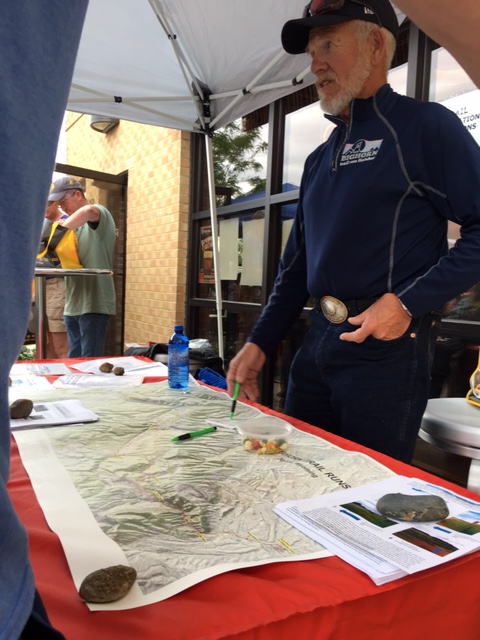
Reviewed the map, reread the manual, talked with one of the race’s first 100 mile finishers.
Every T crossed, nothing left undone.
Should you drive into the Footbridge Aid Station, be aware that there are 2 creek fords to drive through. The second is quite deep at this time. Do not attempt to drive to Footbridge without a high clearance vehicle.
Our aid stations are well stocked with GU products, GU hydration, water, and a full supply of a variety of foods to help you in your endeavor for the distance you have registered and chosen to run. Please remember that the aid station volunteers who hike to their stations are limited in supplies, but are still well-stocked to assist you.
…you should yield to any runner that is catching you from behind, let them pass by stepping to the upside of the trail so that they may continue at their pace. The faster runner does have the right of way, and would be appreciative of your yielding this to them. This is true for horses as well, and others that may be on the trails.
We are expecting fairly average course conditions for 2017, but remember we are famous for the Bighorn shoe sucking mud. There will be snow, mud, rocks, roots, elk and their calves, moose and their calves, bear and their cubs, grouse, snakes, and other wildlife as well as challenges along the way, but we are in WYOMING and just consider this part of the adventure.
Welcome, and safe travels to our wild and scenic Bighorn Mountains!
Thank you,
Bighorn Race Officials
Saturday. Race morning. 5am race start, 45 minute drive from my overnight cabin.
Bed at 8:30, didn’t drop off ‘til after midnight, up again at 3. Mentally sapped.
Not the lack of sleep – FEAR. I can’t do this. It’s too many miles. All trail. I’m at elevation.
Pitch dark, in the car by 4. One deer. Two moose. Then…heavy fog. Large patches of snow [on] both sides of State Highway 14. Only 10 minutes to Start. Where is the turnoff? No cell signal, map left in the cabin.
Must have missed a turn. Back over the pass, back into the fog.
Never ever located the Start. HUGE fail. Have never missed a race – and this my goal race, my first 50.
Tough miss. Just wasn’t meant to be. Loss.
Showered at the cabin, retreated home – left a day early. Prepaid my stay, sunk cost. Home. I’ll figure it out at home.
UPDATE: 3 days later, still Bighorn-wounded but back at it. Reconnecting the dots. Have created a path for 100. All flights booked, all races registered. Ready, ready to run. Looking to Ireland: October 29th. Marathon #100. Focused.
Bighorn 2018? Yep, I’ll be back. Count on it. I’ve never run FROM anything.
-
- Black Hills to Buffalo, WY
-
- course map with Bighorn 100 finisher
-
- “After each failure, ask forgiveness, pick yourself up, and try again.” ― C.S. Lewis
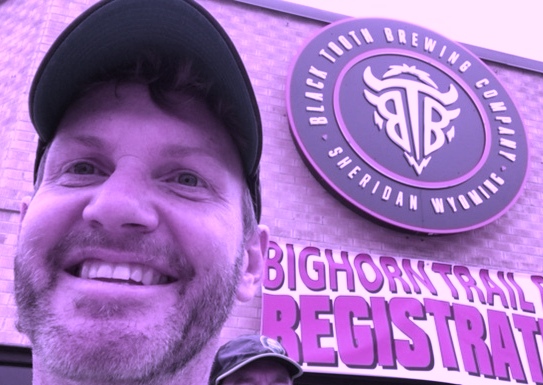
Late arrival in Buffalo, cabin rental 20 minutes west of Dayton. Buffalo NY, Dayton Ohio? Heck no. I’m talking Wyoming. In town for Saturday’s ultra, Bighorn. One mile shake-out run along State Hwy 14, road trippin’ after breakfast.
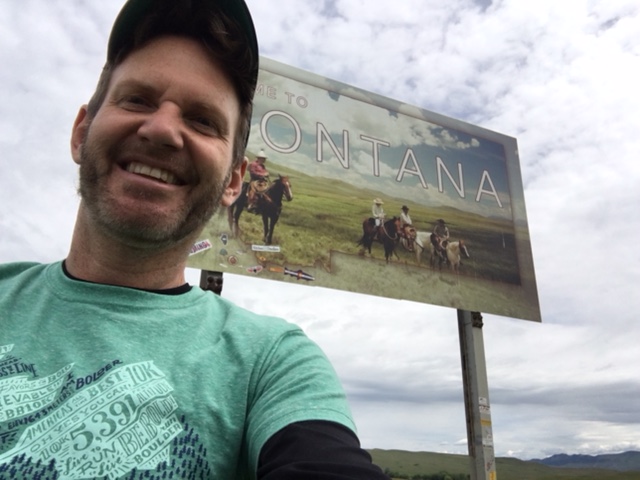
Montana. 2 hours north on I-90.
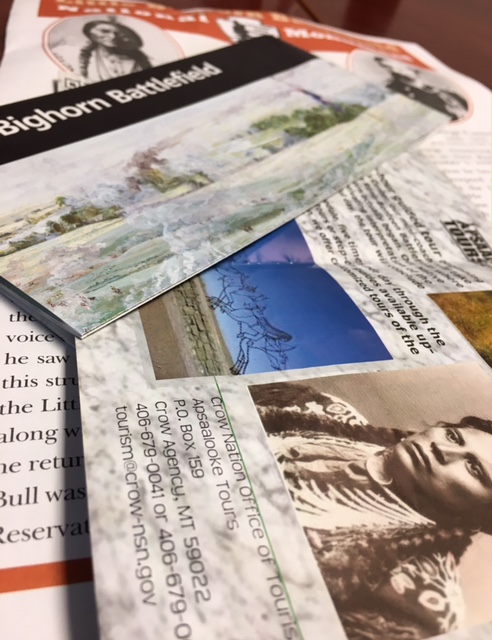
Forty Mile Colony. Lodge Grass. Crow Agency. Today’s destination: Little Bighorn Battlefield on the Crow Reservation.
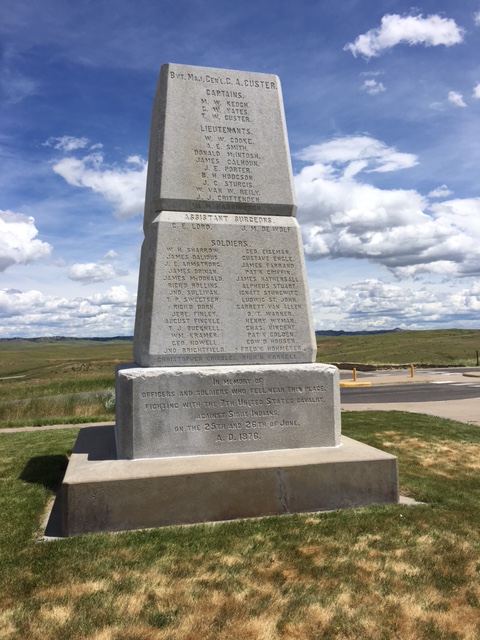
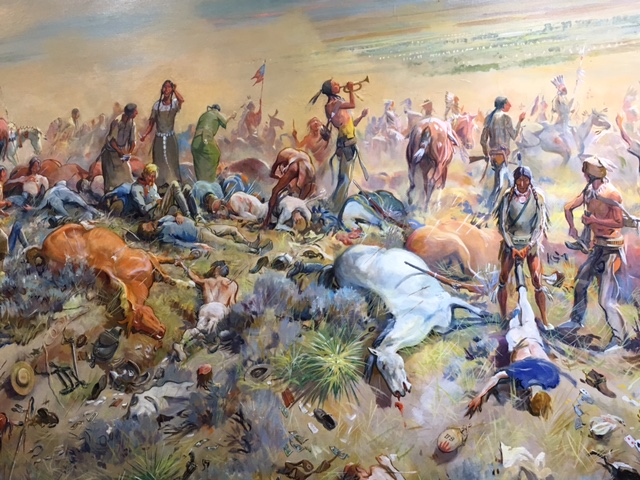
The Battle of the Little Bighorn (commonly referred to as Custer’s Last Stand) was an armed engagement between combined forces of the Lakota, Northern Cheyenne, and Arapaho tribes and the 7th Cavalry Regiment of the United States Army. The battle, which occurred June 25–26, 1876, along the Little Bighorn River in eastern Montana Territory, was the most significant action of the Great Sioux War of 1876.
The fight was an overwhelming victory for the Lakota, Northern Cheyenne, and Arapaho, who were led by several major war leaders including Crazy Horse and Chief Gall and had been inspired by the visions of Sitting Bull (Tȟatȟáŋka Íyotake). The U.S. 7th Cavalry, including the Custer Battalion, a force of 700 men led by Lieutenant Colonel George Armstrong Custer, suffered a major defeat. Five of the 7th Cavalry’s twelve companies were annihilated; Custer was killed, as were two of his brothers, a nephew, and a brother-in-law. The total U.S. casualty count included 268 dead and 55 severely wounded (six died later from their injuries), including four Crow Indian scouts and two Pawnee Indian scouts.
Purchased a guided tour at the Visitors Center, operated by Apsaalooke Tours (affiliated with the Crow Nation Office of Tourism). Bus tour was led by an enthusiastic Apsaalooke [Crow]. Details of the battle & war strategy were painstakingly reviewed. Additionally our guide shared his language, teaching [us] multiple native words: hello, goodbye, bird, coyote, mustang, mountain.
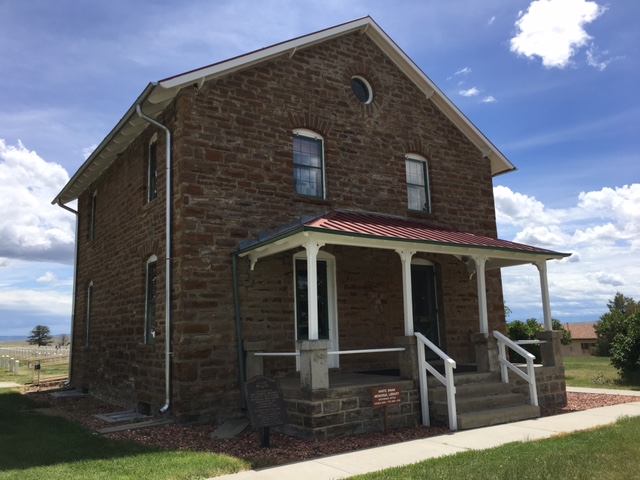
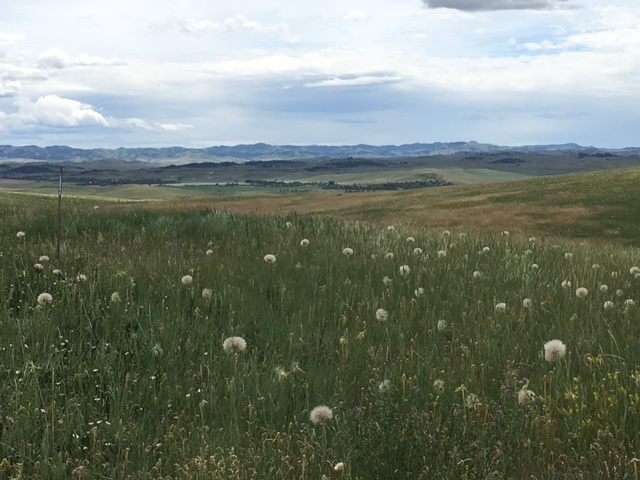
While I struggled with his accent & the story, the landscape around me was breathtaking. LOVED being here. Life is about seizing opportunity. I could have laid low the day before Bighorn…but a short 2 hours away, engaged/partook/learned ‘bout Custer’s Last Stand, a significant piece of U.S. history – a story retold by descendants of the native people who won that battle.
Inspired, I needed to know – so, how did it all end?
After Custer’s defeat, Sitting Bull, along with his people, fled north to Canada. In 1881, he returned to the United States to surrender. Sitting Bull was killed by Indian police on the Standing Rock Reservation in South Dakota on December 15, 1890.
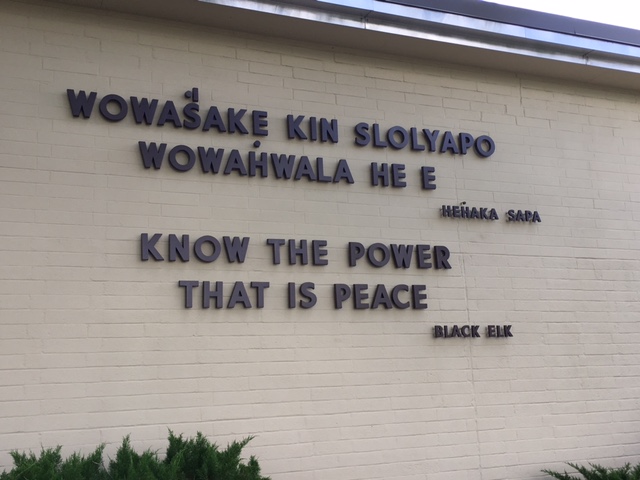
Sad end to the Lakota spiritual leader – resisted westward expansion, in an effort to preserve the Lakota way of life.
-
- Custer Memorial
-
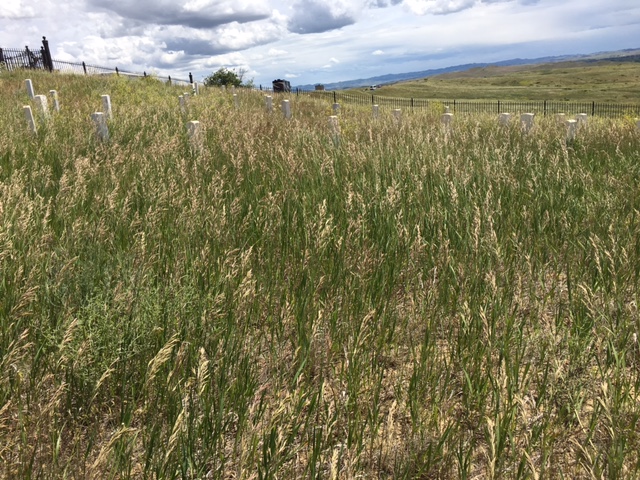
- Last Stand Hill
-
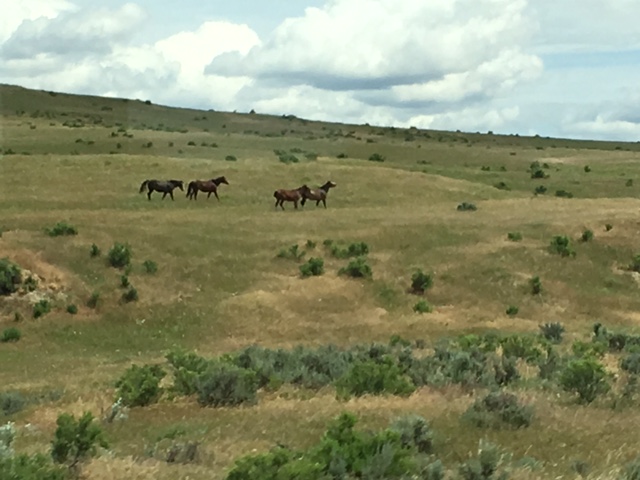
- wild mustang
-
- “Here Fell Custer”
-
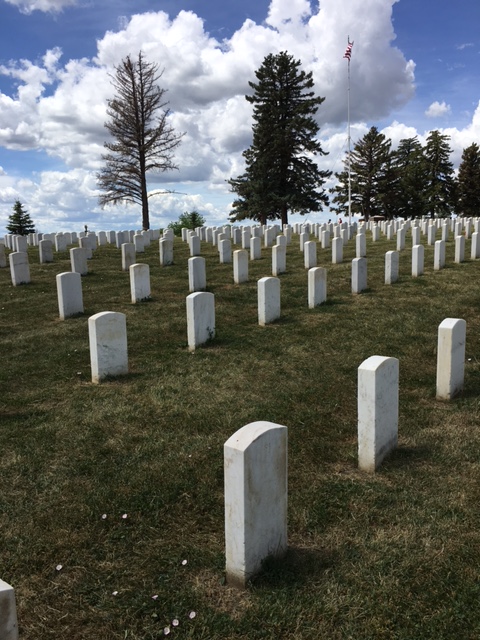
- National Cemetery
-
- resisted westward expansion, to preserve the Lakota way of life
Little Bighorn Battlefield