Late night Friday – head didn’t hit the pillow ‘til 12:30am, Atlantic time. Sunday marathon, Saturday rest day? Heck no – touring Annapolis Valley, then driving 3 hours to Nova Scotia’s southernmost point (pre-race bib pick-up in Barrington Passage).
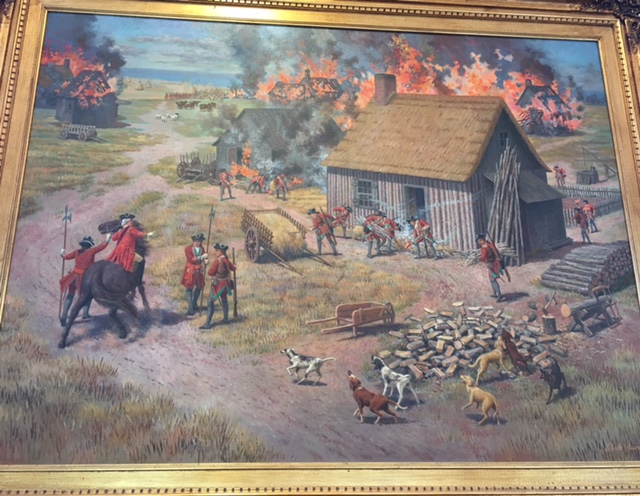
Surrounded this trip by teachers – so felt well educated before this morning’s stop at Grand-Pré [National Historic Site]. On Saturday morning’s run, Kyla talked ‘bout the French Acadians’ intricate levee/tide gate system, creating farmland from Minas Bay & the Bay of Fundy. Same day hiking to Cape Split, Jade spoke of the Expulsion – more than 10,000 Acadians were removed from their houses by the British, many resettling in the States (Boston, NY, Philadelphia…and ‘Cajun’ Louisiana). Sad tale – interesting history.
The Acadians were the first European settlers in Nova Scotia, brought over from France in the years after 1632 to colonize what was then the French territory of Acadie, land which included modern-day peninsular Nova Scotia, New Brunswick and Prince Edward Island. By 1713, when Acadie was ceded to the British and became Nova Scotia, the Acadians were long-settled and well-established. Scattered across the peninsula in a chain of loosely-connected agrarian communities, they claimed political neutrality and asked to be left alone on their farmlands, undisturbed.
Over time, their neutrality became increasingly problematic. Known as the ‘Neutral French’, they were Roman Catholic, occupied valuable and productive farmland, maintained a friendly relationship with the Mi’kmaq, and vastly outnumbered the British — who in turn were predominantly English-speaking Protestants congregated in small, isolated nodes of settlement, where nervous magistrates struggled to govern effectively. All of this at a time when religion, language and relations with the Mi’kmaq were indicators of larger national allegiances — and mattered significantly.
By 1754, Great Britain and France were at war in America and it was no longer deemed safe to have the Neutral French as the majority population in Nova Scotia; their continued presence was perceived as a threat which could not be satisfactorily contained. In June 1755 the British captured Fort Beauséjour, strategically located on the Isthmus of Chignecto at the head of the Bay of Fundy; as the next step in securing the safety of Nova Scotia, the Council at Halifax decided in July 1755 to deport the Neutral French.
Thus began the tragic chain of events which saw the rounding-up of the Acadians, the seizure and destruction of their homes, farms and livestock, their forcible banishment from Nova Scotia.

Visiting Grand-Pré cemented my newly gained knowledge. Adding Longfellow’s epic poem Evangeline made that history personal, humanized dates/facts/figures/their struggle.
“…the betrothal of a fictional Acadian girl named Evangeline to her beloved, Gabriel, and their separation as the British deport the Acadians from Acadie in the Great Upheaval. The poem then follows Evangeline across the landscapes of America as she spends years in a search for him, at some times being near to Gabriel without realizing he was near. Finally she settles in Philadelphia and, as an old woman, works as a Sister of Mercy among the poor. While tending the dying during an epidemic she finds Gabriel among the sick, and he sadly dies in her arms.”
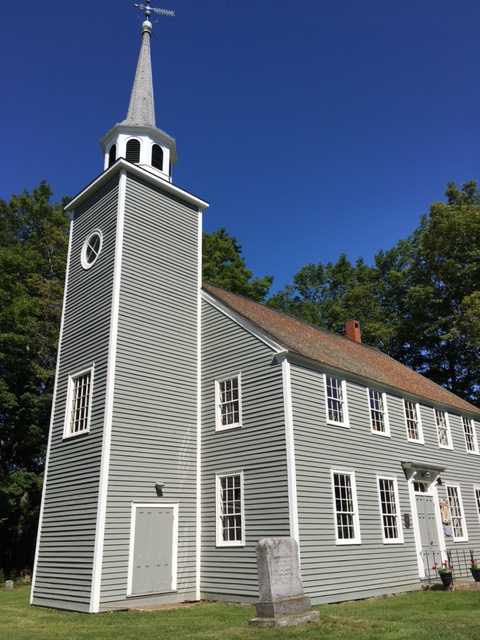
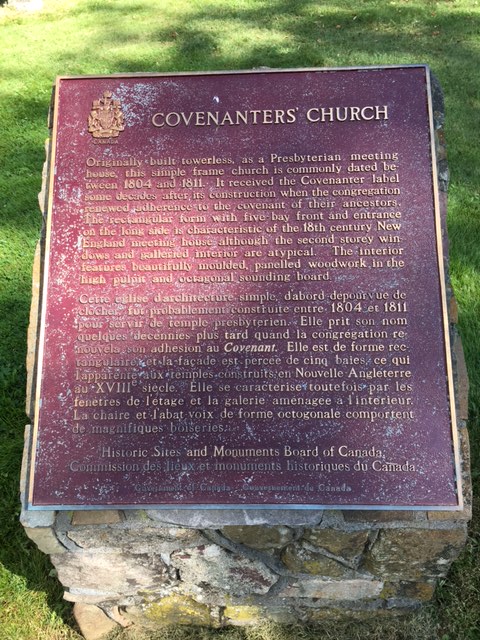
Still before noon, stopped briefly at Covenanters’ Church, the place where Acadians were forced to pledge allegiance to Britain or face deportation. Whole lotta history, emotionally charged morning.
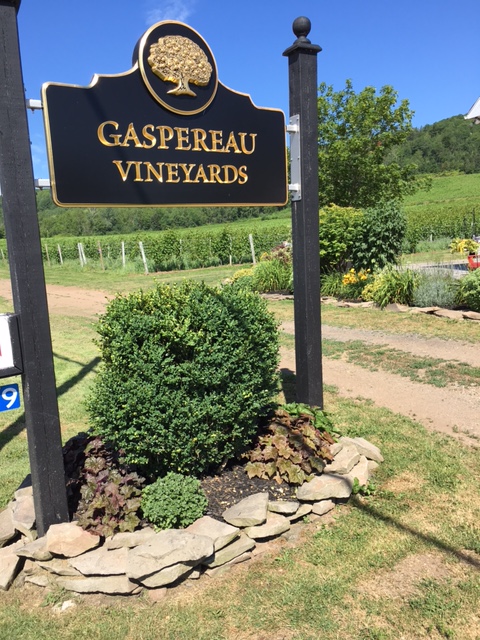
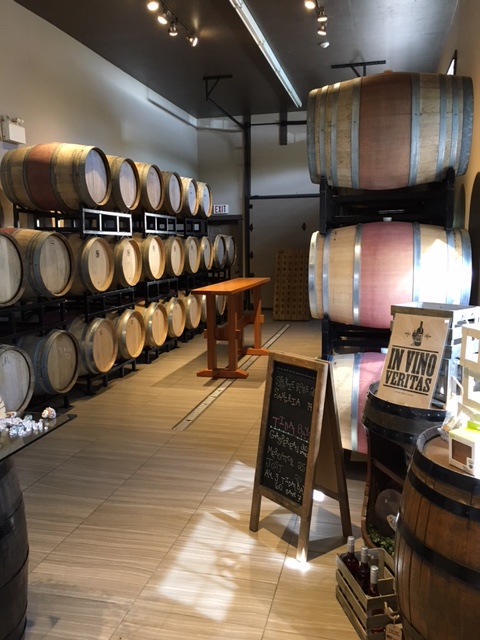
Less history, more geography. Next up: Gaspereau Vineyards. Not a wine drinker (since 2012) but find the scientific process fascinating – the agricultural landscape, the vineyards…stunning.
Few more neighbor visits, lunch, then said our goodbyes. Half-way point: Mahone Bay. GREAT stop for a tea & something sweet 🙂 Snapped a pic of ‘The Three Churches’. Another hour-half on the 103 – SUCCESS, [marathon] packet pick-up in Barrington Passage.
Sleeps tonite in Shelburne. Town’s claim to fame? Founded by British Loyalists, once North America’s 4th largest town (bigger than Halifax, larger than Montreal). More than 10,000 American colonists, still loyal to the Crown, emigrated here (in 1784) just after the end of the Revolution. Who knew?
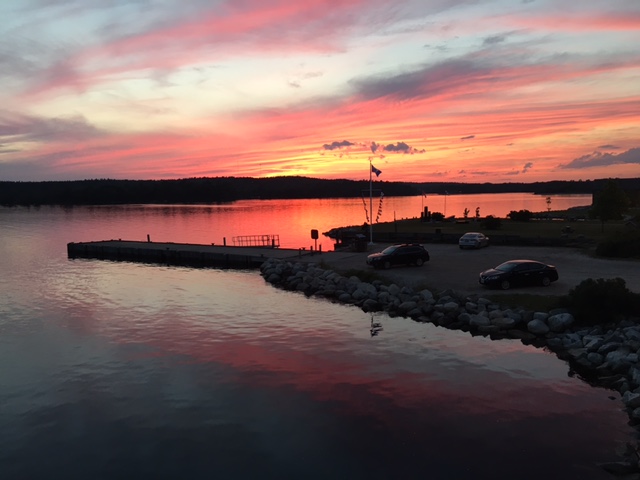
Watched an amazing sunset, beautiful pinks over the North Atlantic. Late 8 a.m. marathon start. Sticking to road, staying out of the water. Big seal population. Our course ‘round Cape Sable Island is a Great White breeding ground. Yikes!
Evangeline A Tale of Acadie (1847)
This is the forest primeval. The murmuring pines and the hemlocks,
Bearded with moss, and in garments green, indistinct in the twilight,
Stand like Druids of eld, with voices sad and prophetic,
Stand like harpers hoar, with beards that rest on their bosoms.
Loud from its rocky caverns, the deep-voiced neighboring ocean
Speaks, and in accents disconsolate answers the wail of the forest.
This is the forest primeval; but where are the hearts that beneath it…
-

- Evangeline

-
- The Expulsion (1755-1762)
-
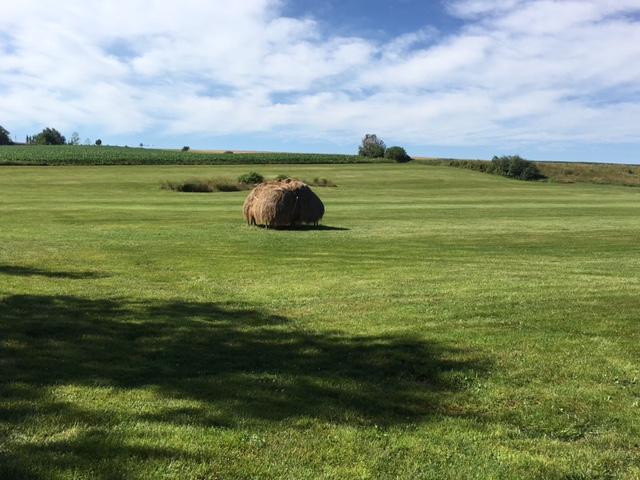
- using an intricate levee/tide gate system, French Acadians created farmland from the Bay
-
- fascinated with the science of wine-making
-
- landscape eye-candy
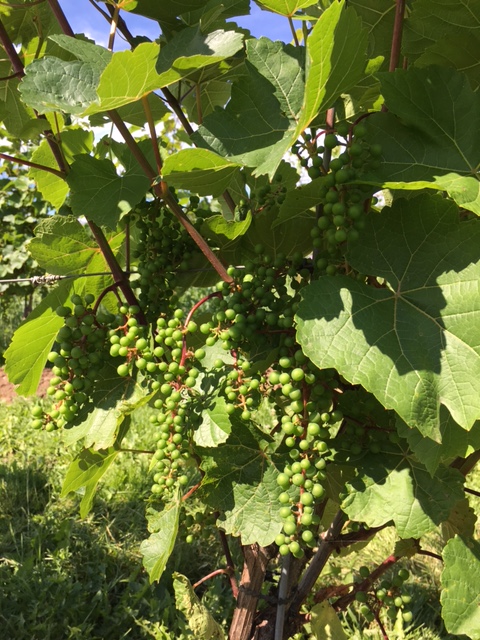
-
- ‘The Three Churches’
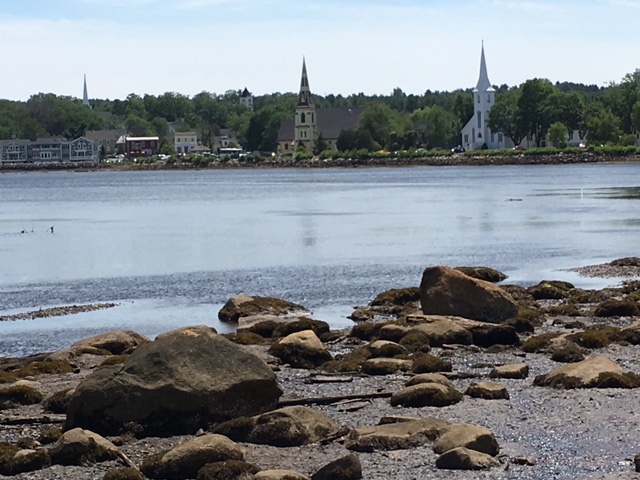
-
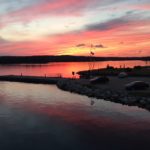
- beautiful pinks over the North Atlantic, marathoning tomorrow
cei·lidh
noun: social event at which there is Scottish or Irish folk music and singing, traditional dancing, and storytelling.
On long, dark winter nights it is still the custom in small villages for friends to collect in a house and hold what they call a “ceilidh” (pronounced kay’lee). Young and old are entertained by the reciters of old poems and legendary stories which deal with ancient beliefs, the doings of traditional heroes and heroines, and so on. Some sing old and new songs set to old music or new music composed in the manner of the old.
It bears mention that ceilidhs are common throughout Nova Scotia. The tradition and the spirit of these gatherings are carried on in most small communities of these maritime provinces.
I’ve always been an ‘old soul’.
Not sure if it’s an ‘oldest’ child trait or maybe I simply spent too much time ‘round my grandparents as a child (miss those times). BUT…seat me at a table on a cruise & I’ll saddle next to Esther, whose deaf mother endured the Holocaust. (No joke – years later, we still exchange Chanukah/Christmas cards.)
Black-n-white flics, 1930’s blues singers & museums (ya’ll know I can find one in every town).
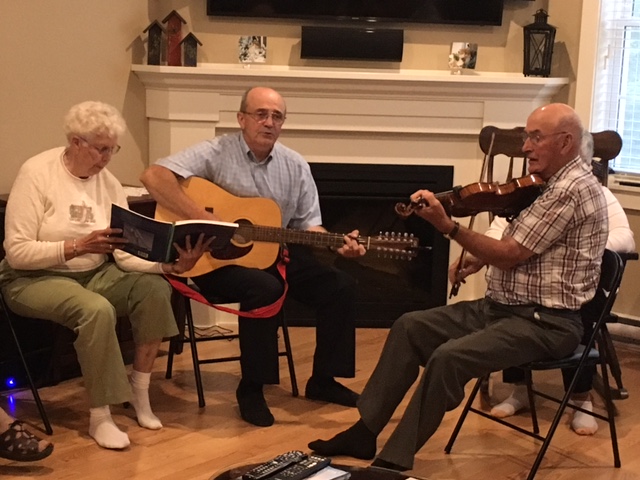
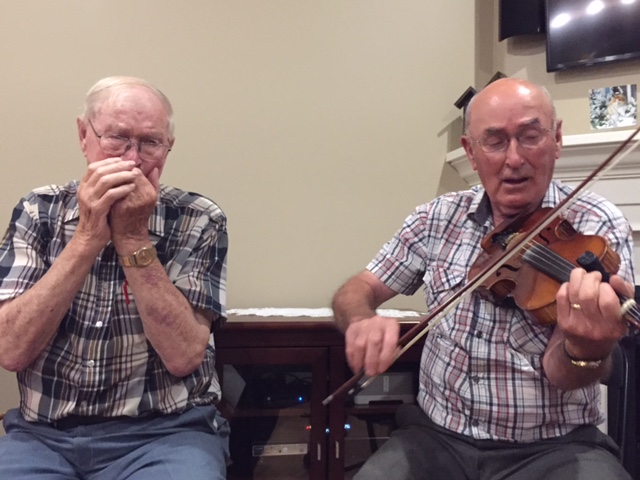
Tonite Lynne would be hosting a Nova Scotian Cèilidh for her American cousins. What a treat! ‘Cèilidh’ or ‘Kitchen Party’? (Heard both terms being used.) Per our hostess: Cèilidhs must include both guitar & a fiddle. In luck tonite – we’ve got both 🙂
No musicians in my family, picked this up [this love] later in life. Remember being invited to Harding & Donna’s home in northern New Hampshire. Upright piano, spoons, washboard, harmonica, surrounded by Trudy & the Pioneers. Really good memories ❤
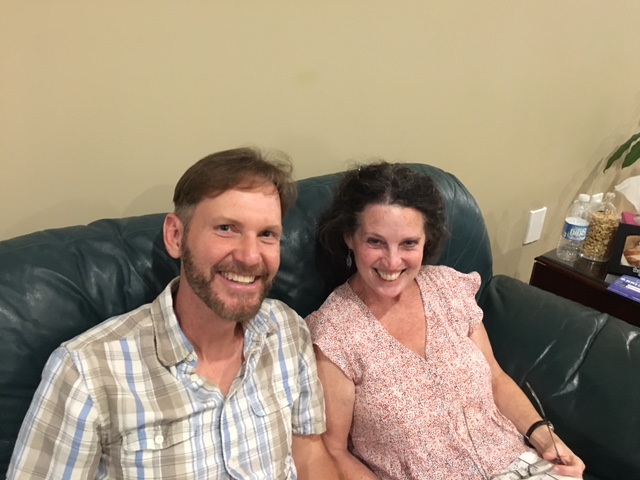
Add games, sandwiches & 2 fast-talkin’ monologues – & you’ve got a Cèilidh. Super FUN evening!
-
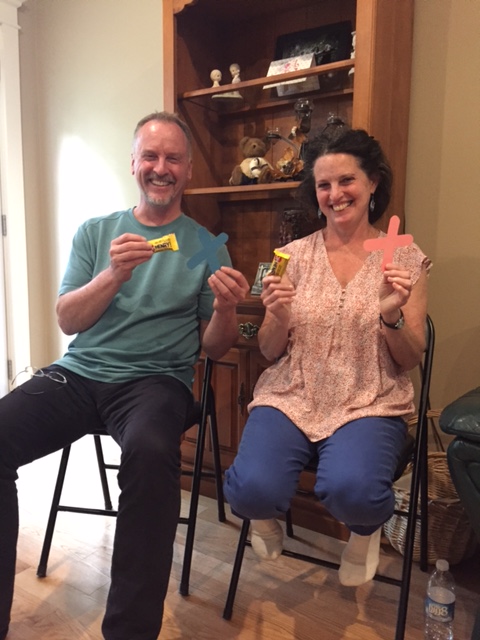
- Americans tested on their Cape Breton/Maritime knowledge
-
- guitar & a fiddle – in luck tonite, we’ve got both 🙂
-

- Super FUN evening!
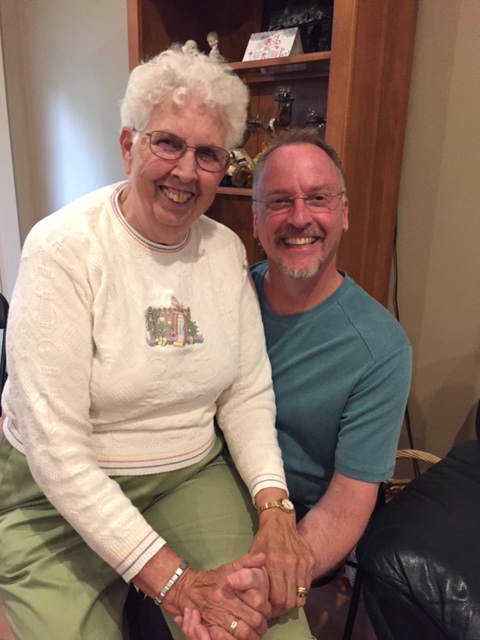
Nova Scotian Cèilidh
Marathon all 10 Canadian provinces in 5 years — that’s the plan. Opportunity knocked. Got to tagalong Stephen & Sheila’s family gathering in Nova Scotia. They arrived the weekend prior, sight-seeing the easternmost portion of the province, Cape Breton.
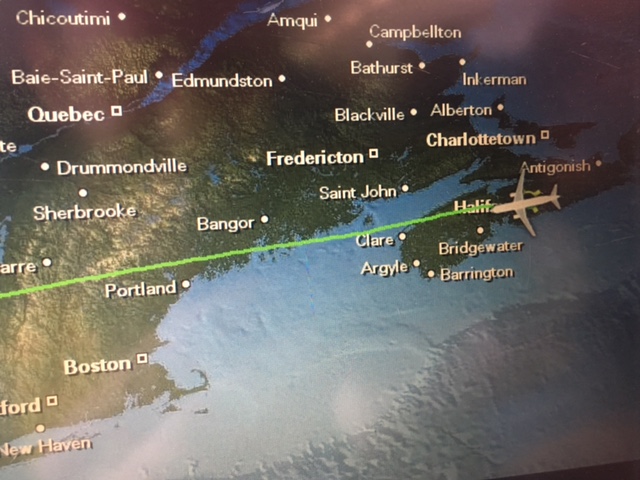
I landed Thursday evening: (Air Canada) Denver to Toronto, Toronto to Halifax. What a greeting – welcomed by the entire Cavanaugh clan! Easy dinner nearby then an hour north to Wolfville. Stayed with Lynne & Andy; beautiful home, gracious people.
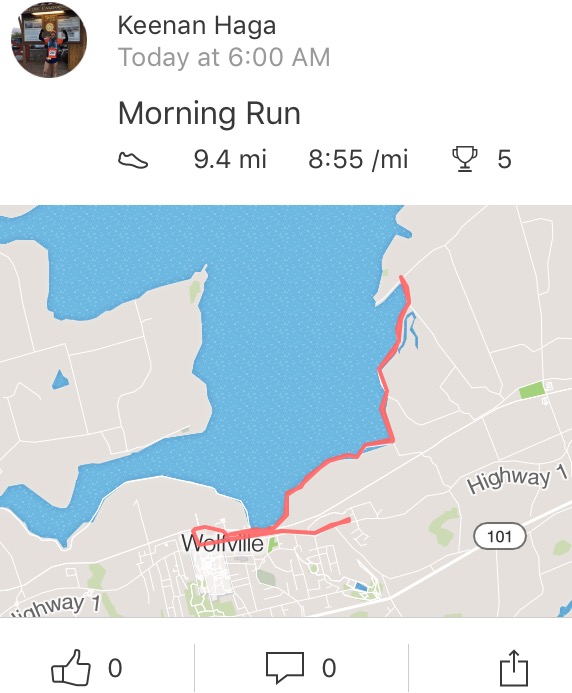
Early to bed, early to rise. Andy had coordinated a 15K trail run with his daughter Kyla, a 2018 Boston Marathon qualifier. Super personality – a mile downtown, past Acadia University, left at the ice rink (home of hockey’s Axemen), then the next hour entirely on trail. Rolling farmland levied from the Bay, 2 centuries ago by the island’s French Acadians.
Quick pace – this gal wasn’t even breathing hard. Ran alongside Minas Basin ’til we hit our target distance, then turned back toward town. 15K, sub-9/minute pace. Whew – welcome to Canada! GREAT 6 a.m. morning run! 🙂
-
- my 4th Canadian province
-
- trail run along farmland dredged from the Bay, 2 centuries ago by the island’s French Acadians
-

- MATCHING uniforms 🙂

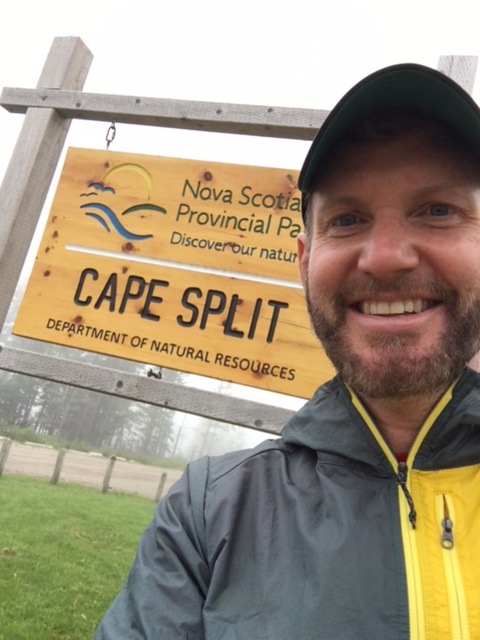
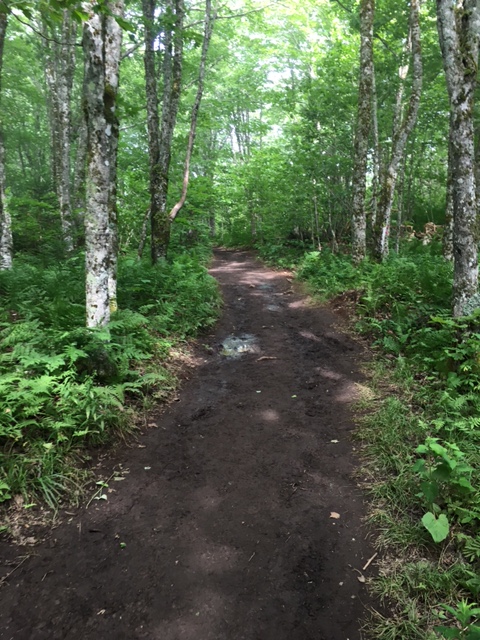
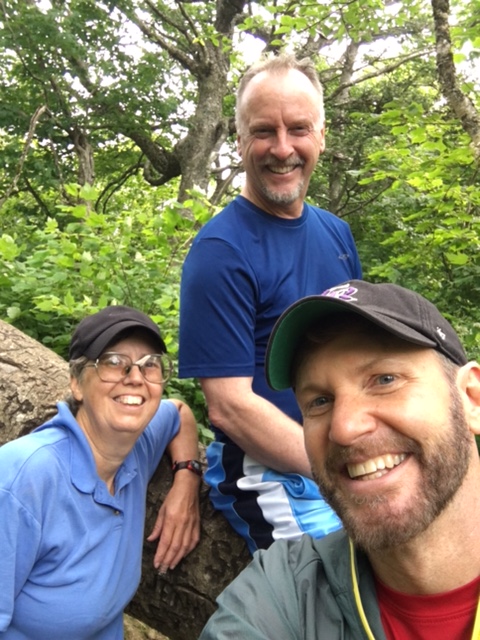
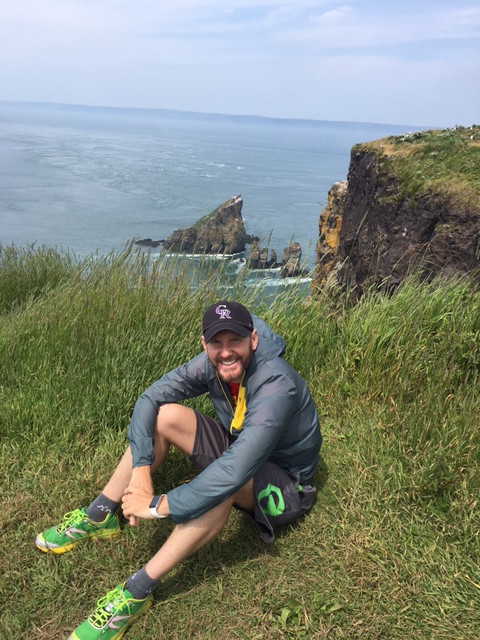
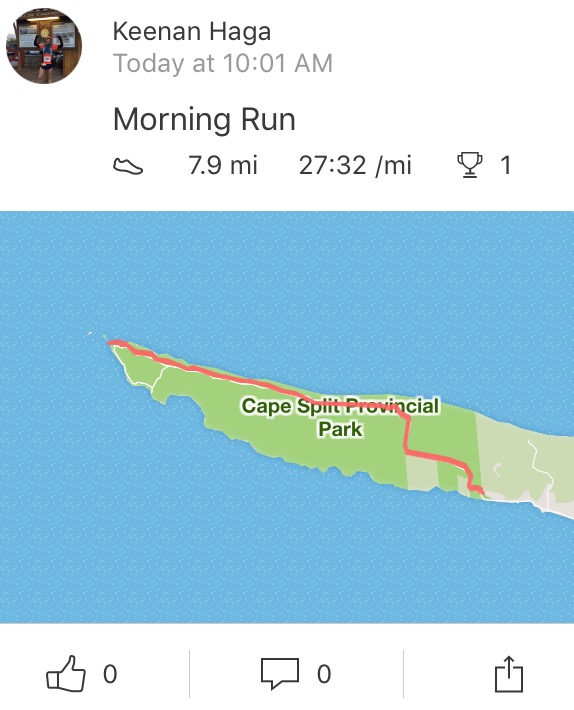
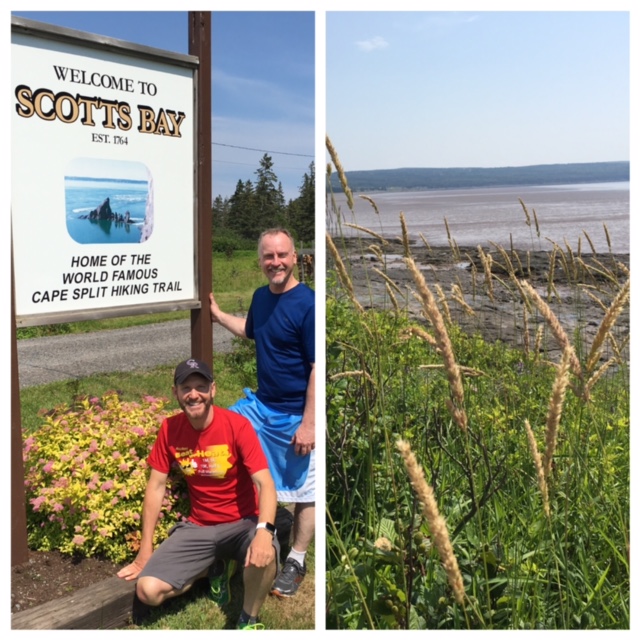
Shower, 2 packets of instant oatmeal – back to adventuring. Hiking the outer tip past Scots Bay, to Cape Split on the Bay of Fundy. 4 miles out-n-back. Lynne’s sister Jade volunteered today’s hike. Cool misty morning, had the trail almost entirely to ourselves. Green, leafy trees completely canopied our trek. Few ups-n-downs, steady even trail, near PERFECT conditions – (skill level) overrated as moderate…absolutely stunning views. Landscape reminiscent of ‘Last of the Mohicans’, similar to our East Coast Alleghenies.
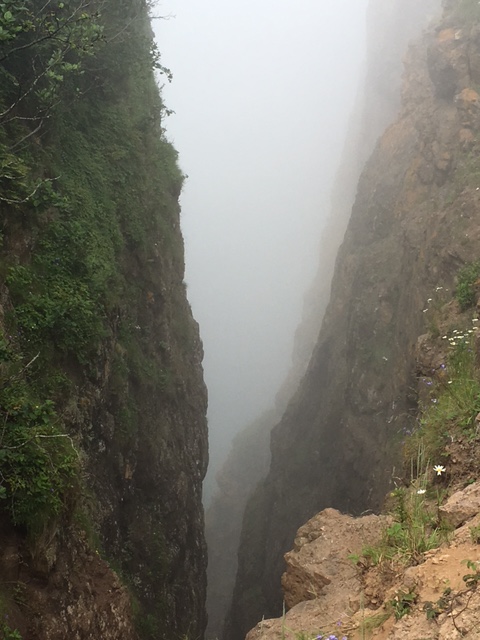
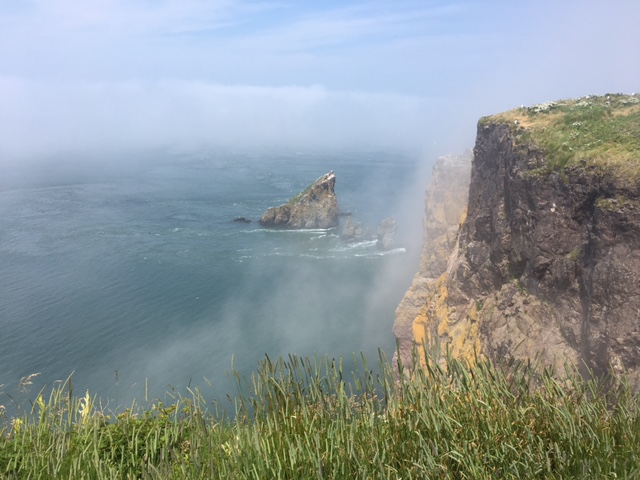
Hike end: tip of the island, Cape Split – completely obscured by dense fog. ARGH! Sea gull cries pierced the all consuming cloud, their bodies darting in & out as they plunged off nearby cliffs, riding the Bay’s blustery current.
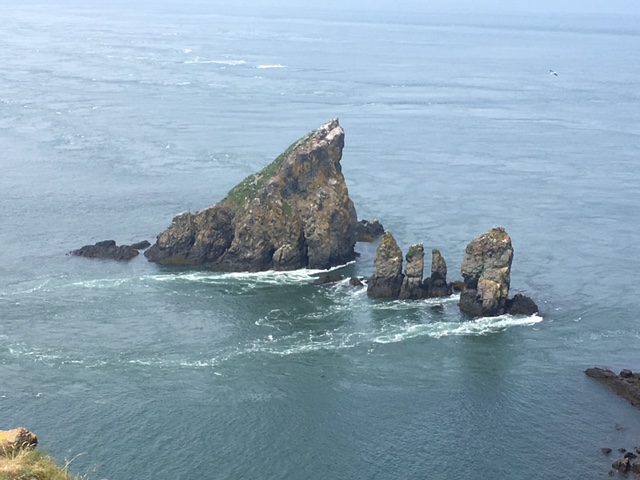
Backpack lunch, then the skies opened. 20 minutes of sunshine. What once was shrouded by thick clinging fog, now exposed multi-coloured rock, high canyon walls & a shark-fin island – Cape Split – pounded by ocean waves in the Bay of Fundy. WOW, WOW, WOW!
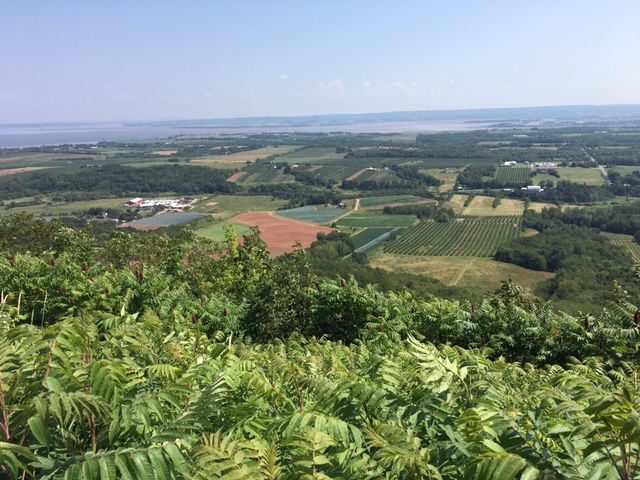
Drove home via Scots Bay. Stopped at the [Blomidon] Look Off, soaked in a scenic/panoramic view of Annapolis Valley. “On a clear day you can see five counties.” Fail – Kings County, the only one [of 5] I can remember (sorry Jade).
Sandwich & an hour nap, more than enough. Attending my first Cèilidh tonite!
-
- ‘Last of the Mohicans’ reminiscent, like our Alleghenies
-
- thanks Jade — BEAUTIFUL hike!

-

- LONG LONG way down!
-
- sea gull cries pierced the all consuming cloud

-
- eerie, yet MAGICAL
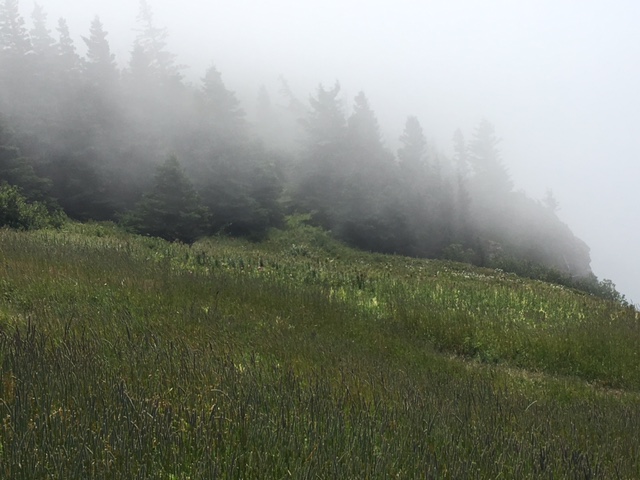
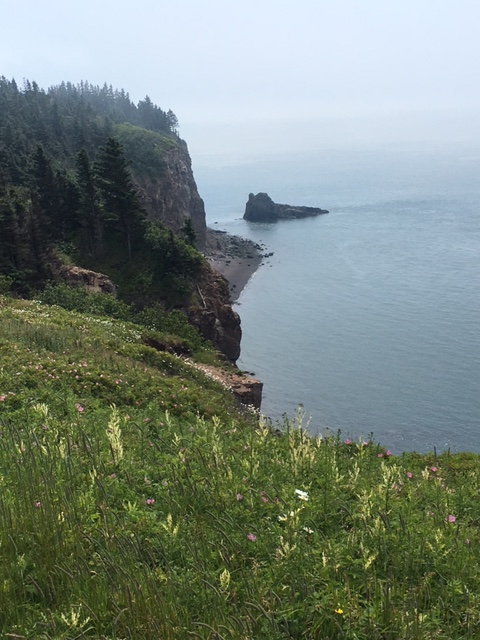
-
- SUNSHINE!
-
- jutting UP from the Bay of Fundy
-

- FAAANNNTASTIC!
-
- 4 mile out-n-back
-
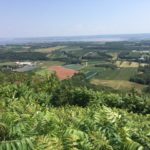
- scenic/panoramic view of Annapolis Valley
Cape Split, NS