Last month kicked off the series with my local ‘go-to’ run, a quick 5 miles ‘round Waneka Lake.
This month thought I’d highlight one of my sis’ favourite runs in St. Louis. Past 3 years have FaceBook-followed Sis’ love/hate relationship with Queeny Park – summer time she’s red-faced, spring time: rain soaked, dodging lightning.
Family Reunion 2016 in St. Louis: HAD to experience Queeny.
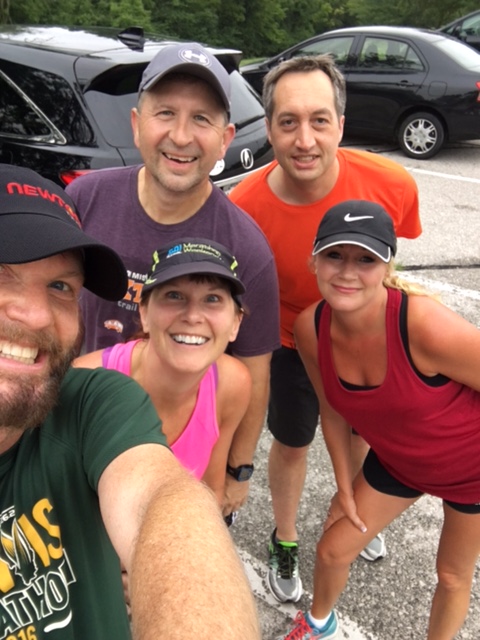
4th of July weekend; most of Sis’ running group no-show’d (think there was a competing run in Forrest Park). Luckily this day, also missed St Louis’ infamous hot humid summer weather. Overcast skies kept morning temps in the 70’s/low 80’s. FAAANNTASTIC!
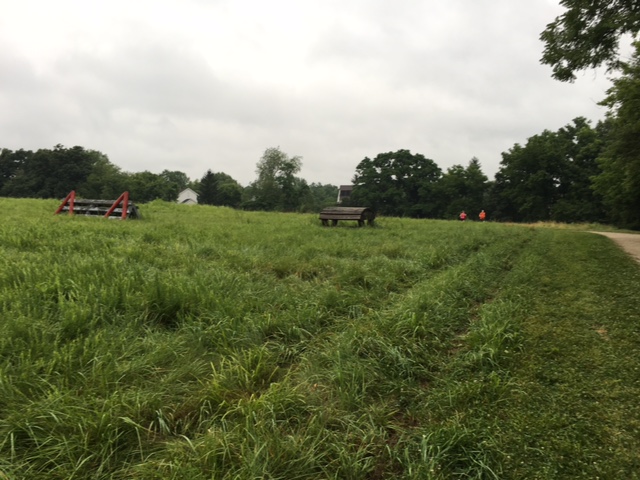
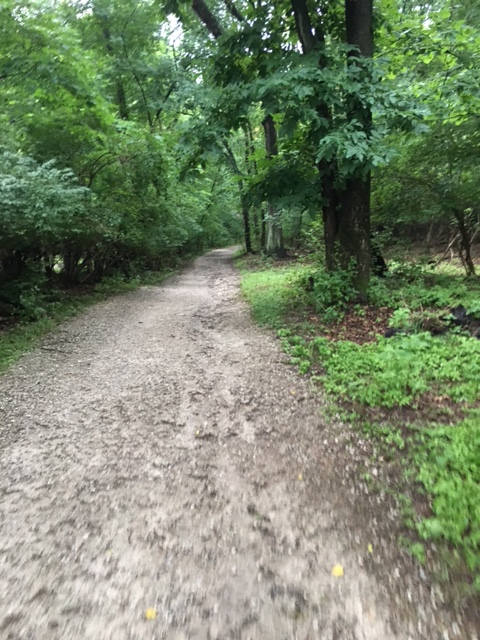
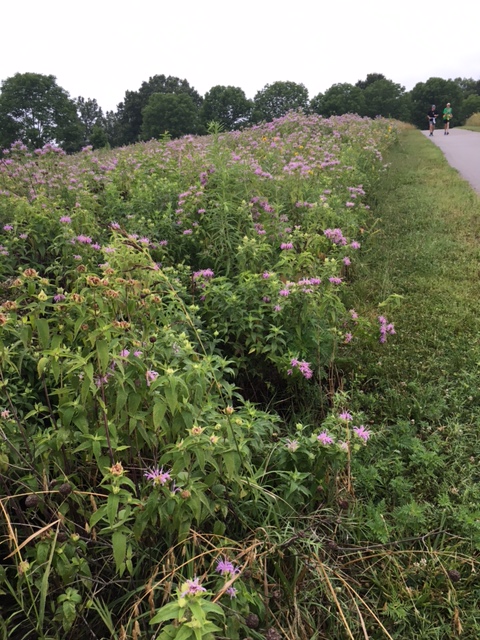
Shaded deciduous, big leafy vegetation, long patches of wildflower, multiple lake views AND hills – lotta up n down. Let’s the body know you’re alive. Often I zone during mile-stretches of flat road.
Don’t get me wrong, LOVE my Colorado trail runs…but St Louis’ Queeny Park did not disappoint. GREAT morning run!
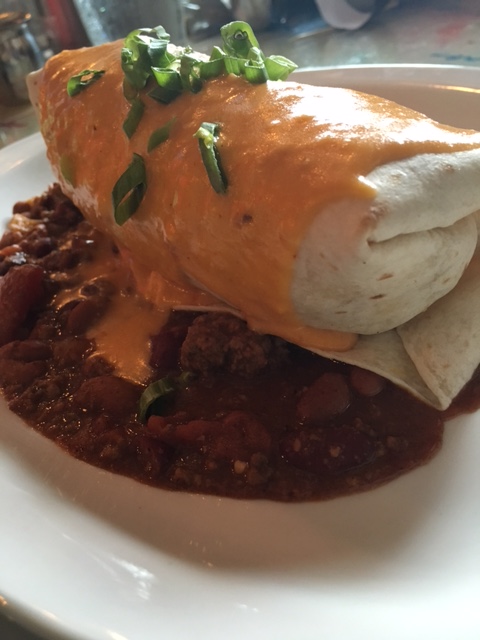
Post-run food reward at The Shack. Family that runs together, stays together 🙂
Welcome to the fourth annual edition of The Go! List, a celebration of the best people, places and things in St. Louis. Here are our critics’ and readers’ picks.
Best breakfast • The Shack
Where 13645 Big Bend Road, Valley Park • More info 636-529-1600; shackstl.com
Where 731 South Lindbergh Boulevard, Frontenac • More info 314-736-5900; shackstl.com
The Shack began life as a midtown restaurant serving larger-than-life sandwiches. Since relocating to Valley Park and later expanding to Frontenac, it has made larger-than-life breakfasts its main calling card. (Lunch is also available.) Feast on waffle-breaded fried chicken, corn-flake-encrusted French toast or any of the omelets, skillets or other dishes, and you can skip lunch. Maybe dinner, too.
-
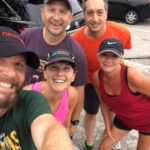
- GREAT morning run in S-T-L!
-

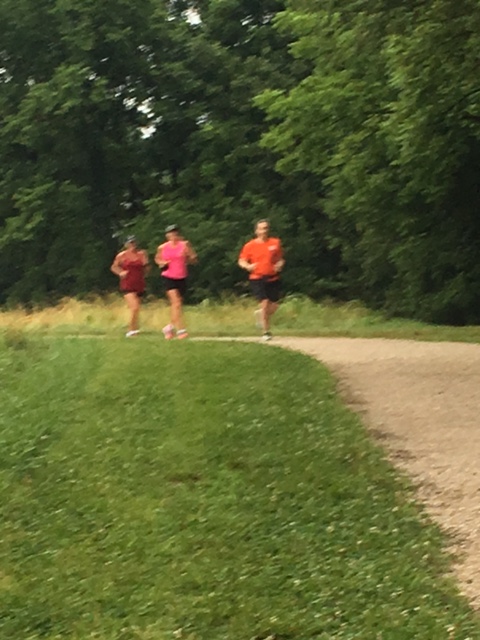
- action shot fail
-
- food reward: chili & Fritos burrito at The Shack
morning run series: Queeny Park (StL)
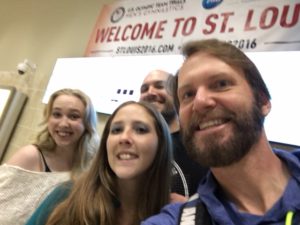
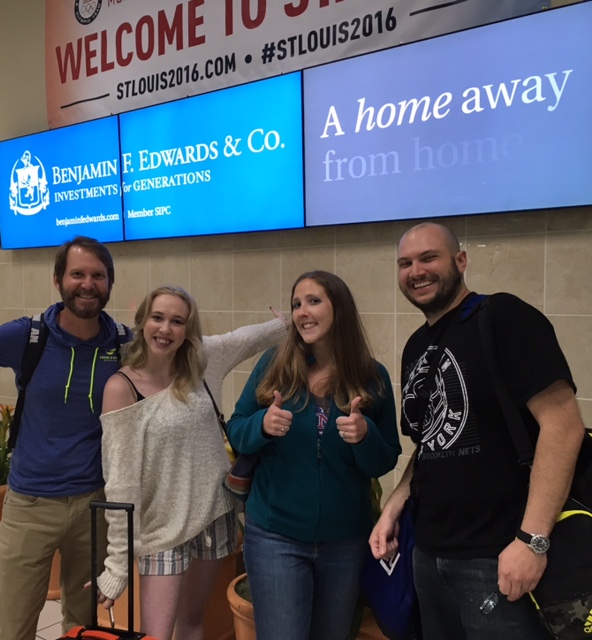
Colorado in the house – let the Games begin!
Pre-crack of dawn Saturday start. Pre-crack? 215am wake-up, Ash & Tom’s home at 3am, 5am flight – connection in Kansas City. Even with the time difference, arrived in St Louis by 10am. Met up with Michaela in baggage claim. She had arrived 30 minutes earlier from O’Hare (after an unexpected overnight stay). Family Reunion 2016!
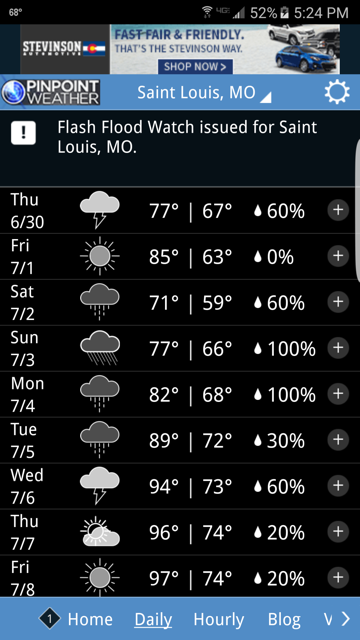
Weather forecast? Rain. Every day, all day. Sis has the worse luck EVER with weather. Lucky for us though, she’s also one of the planet’s best vacation planners – rain or shine, the Games would go on as planned 🙂
Started with a late breakfast/early lunch. Met up with Mom, brother & his family – in addition to my Sis’ two children. No kids no more. Everyone’s now in high school, college or boozers over 21. HA!
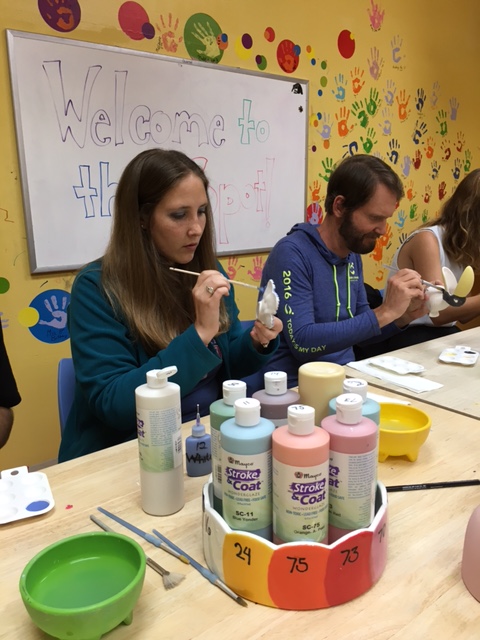
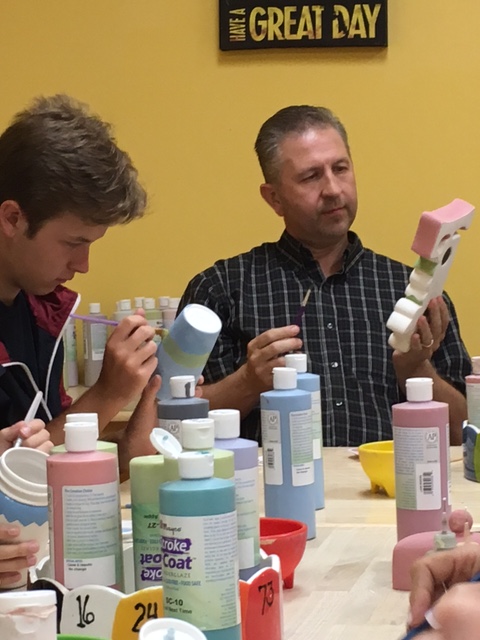
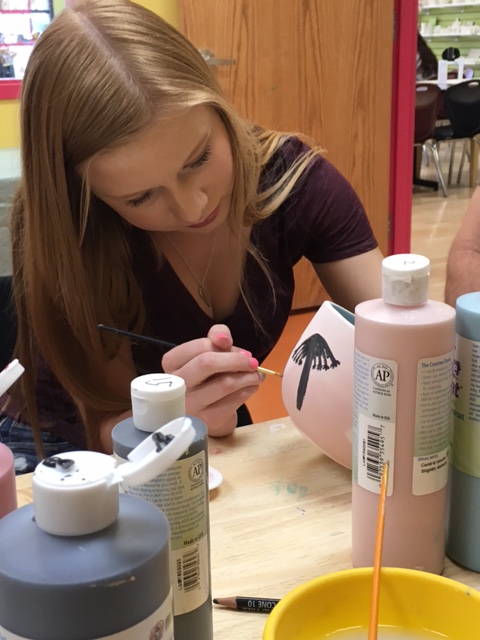
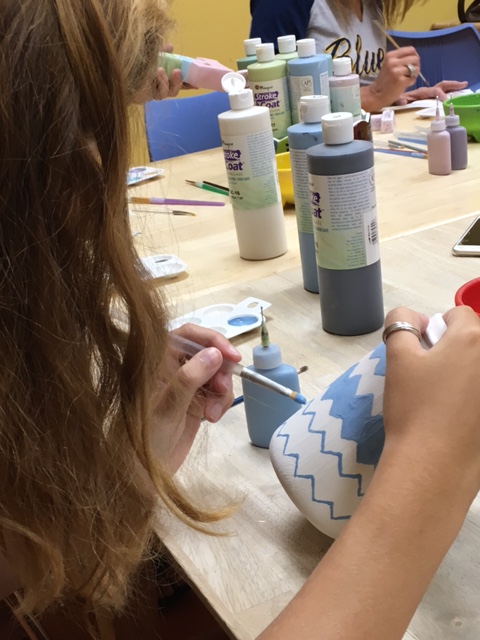
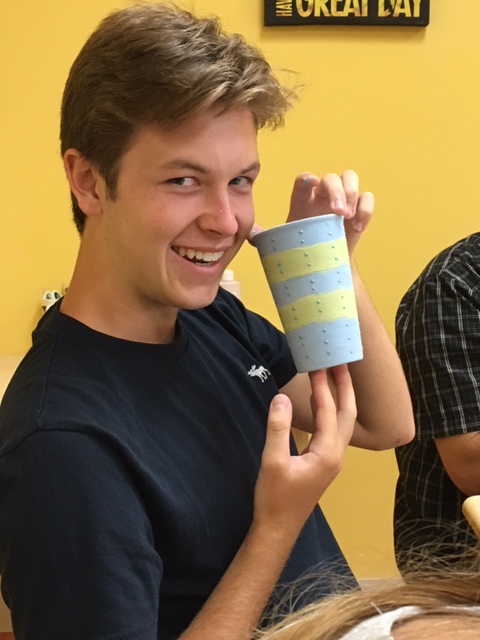
1st activity: ceramic painting at That Painting Spot
Here’s how easy it is to create your own masterpiece:
- Pick out a piece pottery that you would like to paint. Prices are marked on the shelf and typically run from about $7 up to $40 (maybe a little more for a giant platter). We have lots to choose from — from useful cups and large platters to all kinds of animals and fantasy figures.
- Go to the the Paint Bar and pick out your colors. We have red to purple and almost every color in between, so go wild. We also have specialty paints called jungle gems to give your piece and extra bit of pizzazz, at no extra cost.
- Get to work. One of our Studio Consultants will help you get comfortable at a table. Feel free to ask for any advice or how to use or stencils, sponges, writers or other special techniques. We also have paper and pencil available if you want to sketch out your design before starting to paint.
- When you are finished painting, let us know. We’ll put your name or initials on the piece and then move your artwork to a safe drying area. After that our Studio Assistants will check you out and you can be on your way. Hold onto that white ticket though, you’re going to need it later.
- When your pottery is completely dry, we still have work to do. We will glaze your artwork and then let it dry again. Next we will load it in our kiln and fire it. Temperatures in our kilns reach nearly 2000 degrees Fahrenheit. It will take at least another day to cool off after firing. Your masterpiece will be ready to be picked up in the next 7-10 days.
And that’s all!
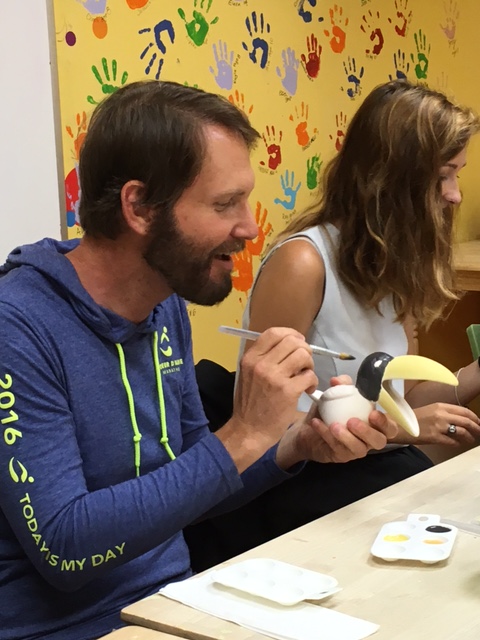
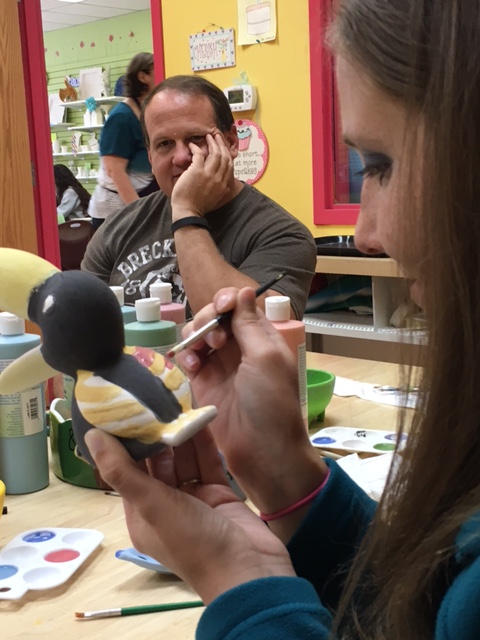
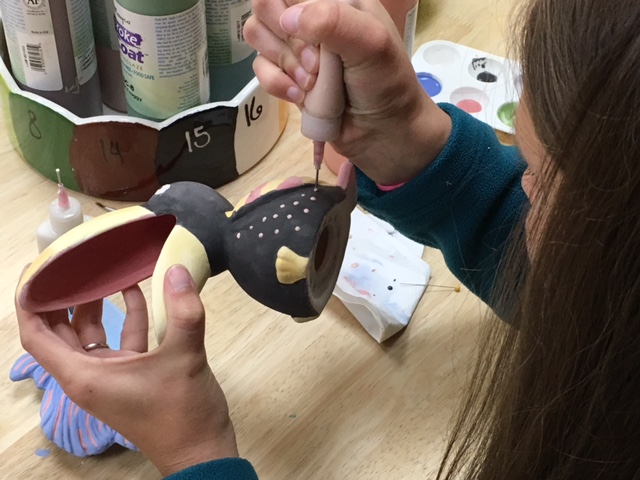
Spotted an unfinished toucan with a kitchen sponge in its mouth – yep, that’s for me. Honestly, not a crafty person – so enlisted help & advice with colour and brush selection.
You really have to trust the process, applied paint appears super dull. Basted my bird twice. Surprisingly, took the entire 2 hour time allotment. Will long remember sharing this day with family. Whole lotta laughs.
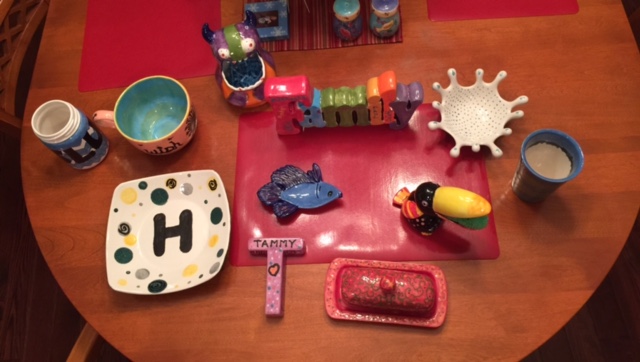
Sis shipped our masterpieces a couple weeks later. Whatta GREAT idea! Quite the creative bunch.
-

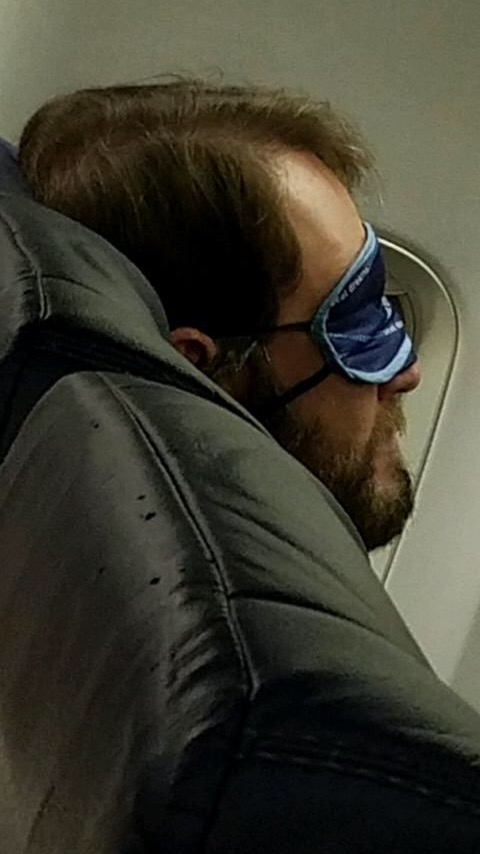
- pre-crack of dawn: 5am flight, KC connection
-
- Saturday, Sunday, Monday — lucky for us, we avoided any sunshine 🙂
-
- Colorado in the house – let the Games begin!
-
- tuxedo black – fave colour at the table
-
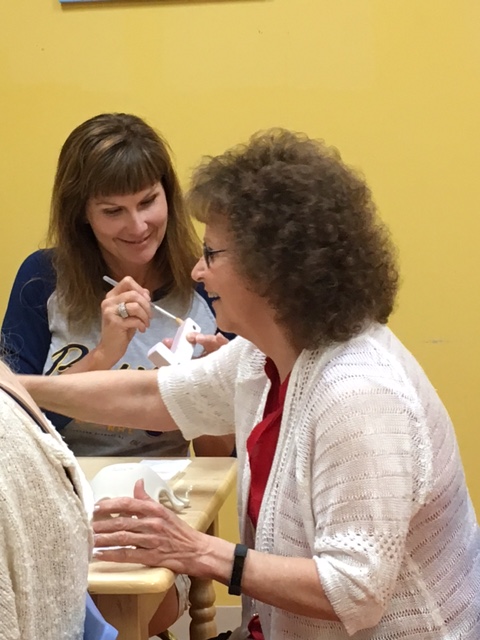
- Mom & Sis
-
- Ash
-
- Paul
-
- Maddie
-
- my bro, James
-
- Victoria
-
- Jack
-
- Michaela
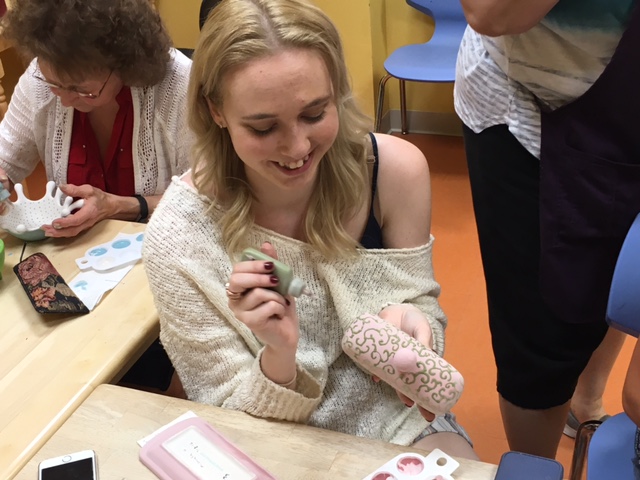
-

- Tom
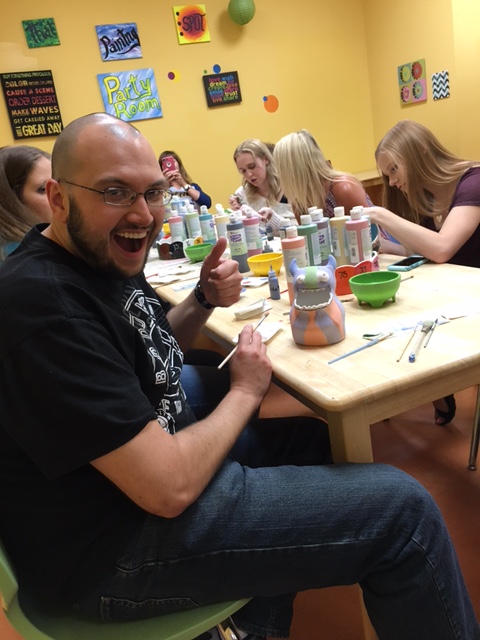
-
- ok, ok — had a ‘little’ help finishing mine 🙂
-
- whatta GREAT idea!
Most people are interested in family heritage, wanna understand from where they come.
I grew up in a traditional family; didn’t lose my first grandparent until 2005 – lucky in life. Strict religious family…lotta rules, lotta do’s & don’ts. I wasn’t a rebel, I didn’t buck against the rules – it’s what I knew, it provided structure. I didn’t think for myself until university.
- <they say> Today’s generation have no morals, have lost their way – and their carnal actions are destroying our nation.
- <I say> Today’s generation’s morals are no more in decline than they were in the 20th century. Folks are just much more honest in sharing daily details with family & friends.
Secrets.
All families have them…whether they’re blue-bloods, religious right or working class Joe’s.
I remember attending my grandparents’ 35th wedding anniversary party. Still a kid, but old enough to do math. How was it that my Dad was older than 35? But so were my aunts & uncle. Confusing.
At that time in life, we travelled each June on a dirt road to a backwoods cemetery & placed plastic flowers by grave stones. One year my grandmother’s brother & his family attended. They laughed loud, smoked cigars & drank whiskey sours. No one wore Sunday clothes. Definitely not ‘church going’ people. Scary & intriguing. Secret sharers.
Appears Grandmother had been previously married – in fact, married my aunts & uncle’s dad twice. Lotta conflicting stories however surrounded my dad’s dad. Grandmother was born in 1931, dad 1947. More math.
Grandmother died 2 years ago, my dad in 2008. No one talked, shared their secret.
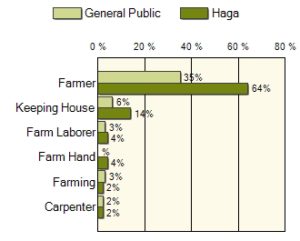
1880 Federal Census Data
Haga Name Meaning
Norwegian: habitational name from any of numerous farmsteads in southern Norway, so named from Old Norse haga, dative case of hagi ‘enclosure’. This surname is also established in Sweden.
Haga Family Origin
The information for this chart came from the U.S. Immigration Collection. You can find out where the majority of the Haga families were living before they immigrated to the U.S and learn where to focus your search for foreign records.
Immigration records can tell you an ancestor’s name, ship name, port of departure, port of arrival, and destination.
Norway (47), Sweden (11), Germany (9), Russia (7), Finland (6), Netherlands (6)
Scandinavian farmers. Matches the tale told from family, but what do I REALLY know about my natural father’s ancestry. Went online, read a lot of product reviews & customer testimonials. Ultimately, ordered a genetic kit from 23andMe.
Important Points You Agree to When Using Our Service:
You understand that we do not provide medical advice. You should not change your health behaviors solely on the basis of information from 23andMe. Keep in mind that genetic research is not comprehensive and the laboratory process may result in errors.
You may learn information about yourself that you do not anticipate. Once you obtain your genetic information, the knowledge is irrevocable.
Kit stayed on my kitchen counter for 2 months. Kept waffling – wanted to know/didn’t want to know.
One day in early March, read the instructions, fasted night before & abstained from liquids (aside from genetics, medical mappings are included which could be influenced by food & drink contaminants).
23andMe provides a test tube size, saliva collection container. Affixed kit-provided bar codes to each collection article & popped my completed kit in the mail. Non-evasive, couldn’t be easier. Now just a waiting game.
Over time, I envisioned multiple ancestral possibilities for my father’s past. Lotta mixing of races in the 19th century. African?
A majority of US citizens share a Native American history. 23andMe would not only identify my indigenous past but also provide a clue as to what major tribe. Would I be Arapahoe, Ute, Lakota, Navajo – or maybe an East Coast people like the Iroquois?
My father had dark hair and a sun-baked complexion – yep, American Indian 🙂 [Knowing what I do know about my family ancestry, actual possibility of me being Native American is almost laughable – uh, not likely.]
 email inbox – my test results were available online.
0% Asian, 0% African, 0% Native American…100% European – nope, nothing exotic. Scandinavian, German, Celtic dominate.
Test must be bogus. Certain I must be American Indian. LOL>
Physical traits
Blue eyes, fair skin. Hair texture – not curly, not straight…wavy. Still not convinced. Anyone with FaceBook can pull up my profile pic & provide this info.
Ring finger longer than fore finger. Non-existent back hair. Blog family – that’s as much as you’re gonna get online. Mind blowing so many unique genetic markers, all tagged from a single vial of spit. LOL>
You have more Neanderthal variants than 97% of 23andMe customers.
However, your Neanderthal ancestry accounts for less than 4% of your overall DNA.
- Scandinavian 34.7%
- German 26.3%
- Celtic 17.8%
The earliest people of Scandinavia hunted reindeer and seals and fished for salmon. By 4000 years ago these hunter/gatherers had been joined by cattle herders from the south. Although at the northwestern periphery of Europe, Scandinavia has never been completely isolated from peoples to the south and east.
FASCINATING – but worth the money?
My parents’ halpogroup mapping provided genetic clues about the migration of my ancient ancestors.
My mother’s family Scandinavian & North Sea German, migrated West.
My father’s family originated from the Balkans and southern Europe, migrated north thru Eastern Europe (including 0.3% Ashkenazi Jew)…then West.
(my Who Do You Think You Are? moment)
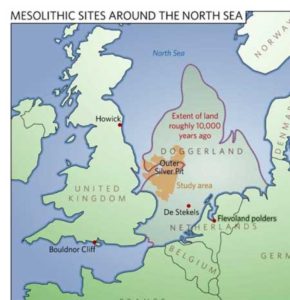
Both my mother’s ancestors from the North & my father’s southern European ancestors, migrated to the same ancient land – Doggerland – later flooded by the North Sea, a real-life Atlantis. WOW, that’s kinda cool.
[mother] Halpogroup H1 appears to have been common in Doggerland…
[father] Scientists speculate that Halpogroup I2 is associated with the ancient civilization of Doggerland. Doggerland, coined a real-life Atlantis, was a civilization in an area that is now covered by the North Sea.
While my results did not reveal a Native American past – this day, I reclaimed a kingdom, a crown, an ancient past.
Long live the King of Doggerland!
Doggerland was an area of land, now lying beneath the southern North Sea, that connected Great Britain to mainland Europe during and after the last Ice Age. It was then gradually flooded by rising sea levels around 6,500–6,200 BCE. Geological surveys have suggested that it stretched from Britain’s east coast to the Netherlands and the western coasts of Germany and the peninsula of Jutland. It was probably a rich habitat with human habitation in the Mesolithic period, although rising sea levels gradually reduced it to low-lying islands before its final destruction, perhaps following a tsunami caused by the Storegga Slide.
The archaeological potential of the area had first been discussed in the early 20th century, but interest intensified in 1931 when a commercial trawler operating between the sandbanks and shipping hazards of the Leman Bank and Ower Bank east of the Wash dragged up a barbed antler point that dated to a time when the area was tundra. Vessels have dragged up remains of mammoth, lion and other land animals, and small numbers of prehistoric tools and weapons.
Doggerland was named after the Dogger Bank, which in turn was named after the 17th century Dutch fishing boats called doggers.